Guides
29 guides
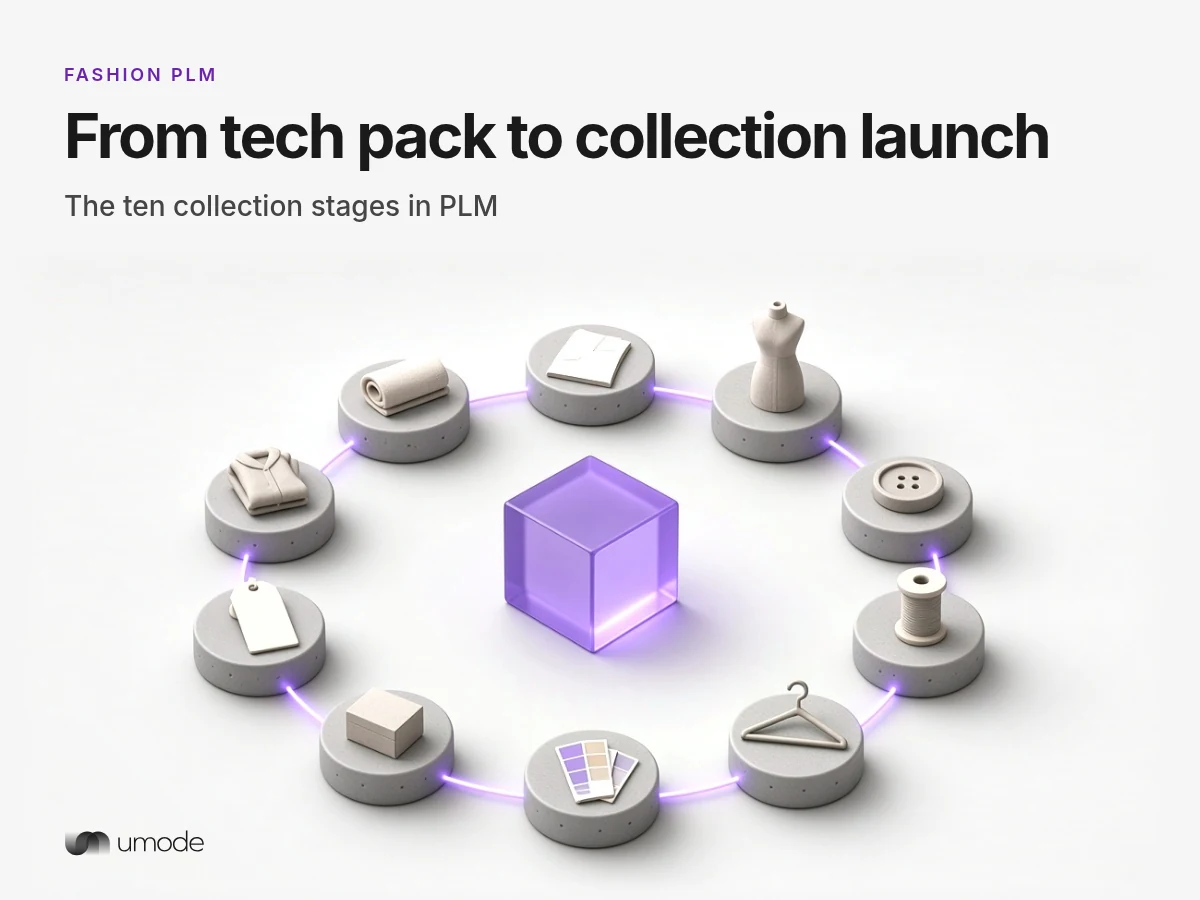
Fashion PLM: the complete guide, from tech pack to collection launch
Fashion PLM explained: how one source of data carries the collection from assortment plan and tech pack to supplier, ERP and ecommerce, and where to start.
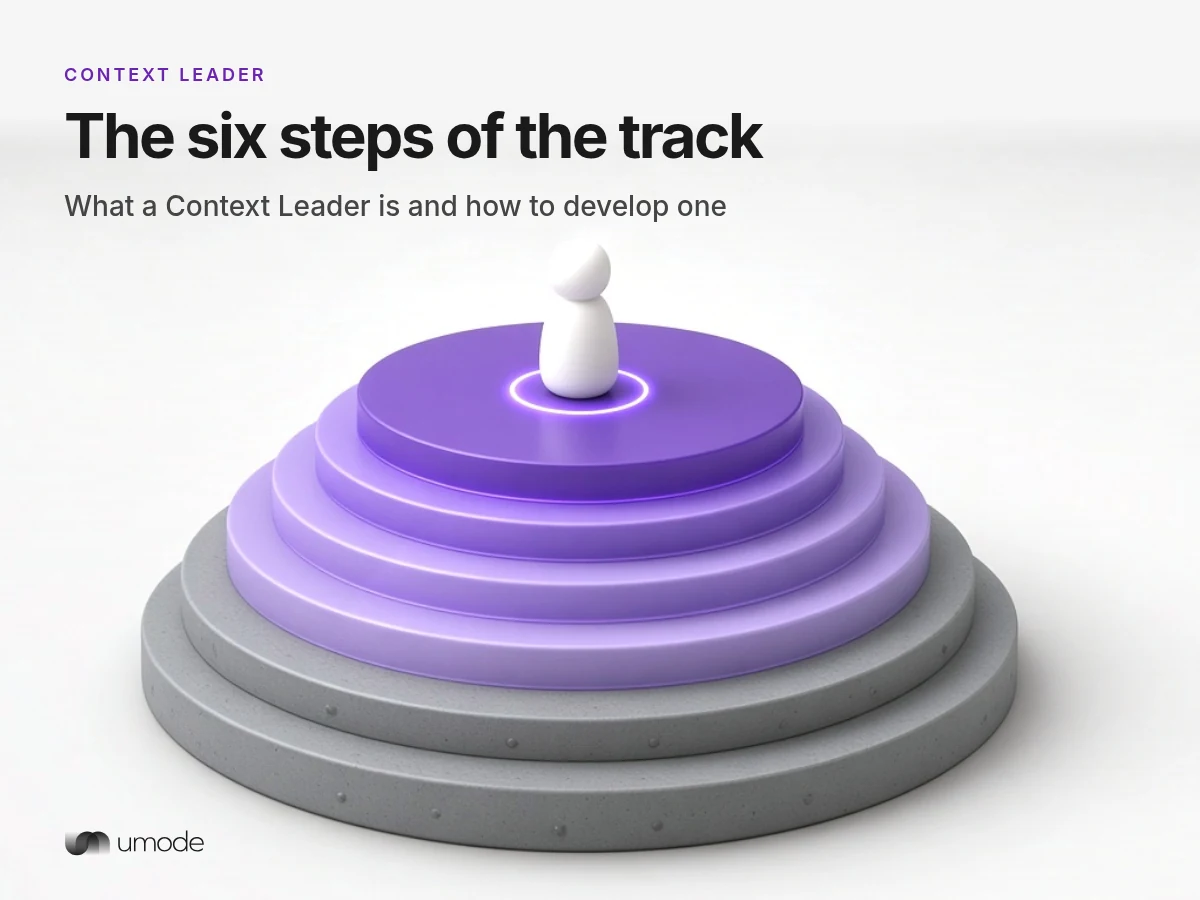
Context Leader (HIC): what it is, the six steps of the track and how to develop one
What a Context Leader is, uMode's method to develop a high individual contributor (HIC) with AI: the six steps, the context levels C0 to C3 and how to move up.
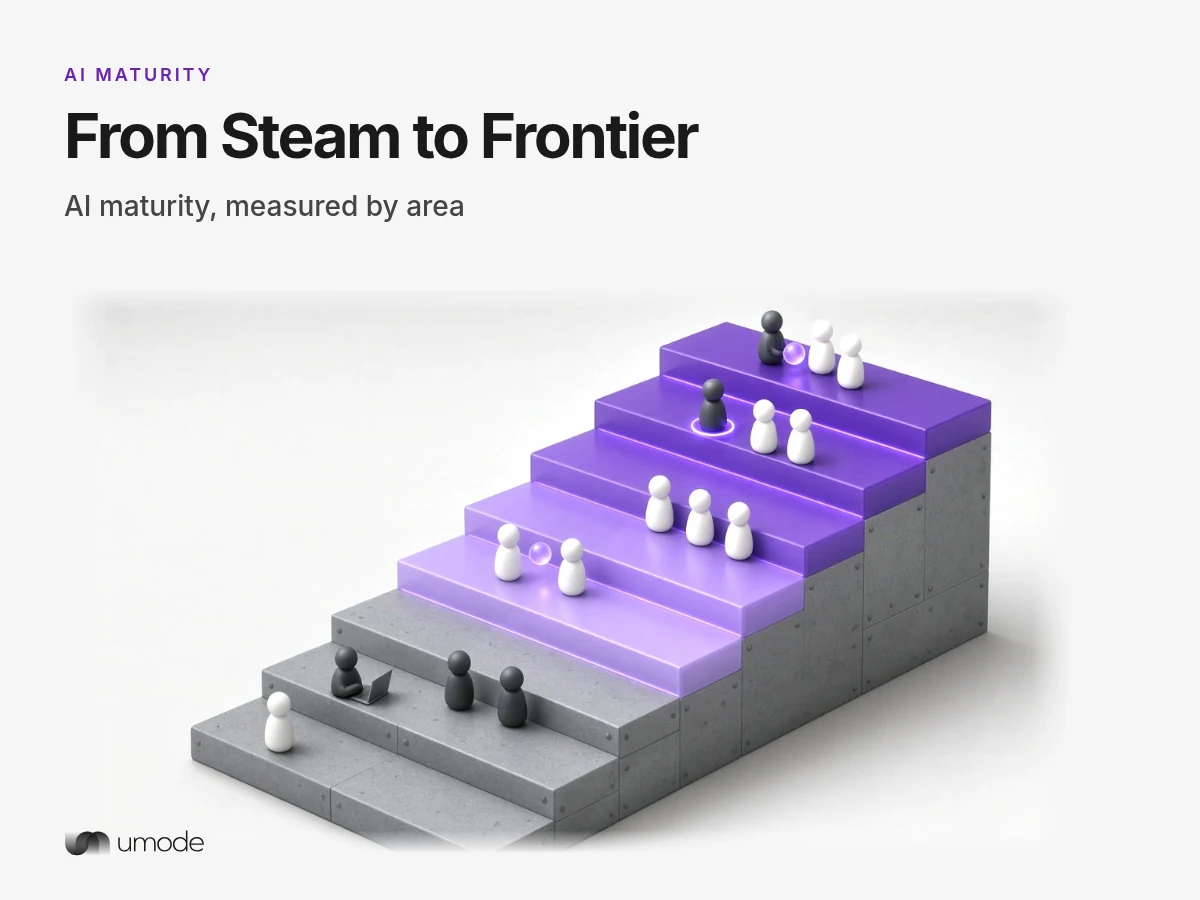
AI maturity model for fashion companies: from Steam to Frontier, measured by area
An AI maturity model for fashion companies: seven stages from Steam to Frontier, the signal for each one, how to measure area by area and how people move up too.
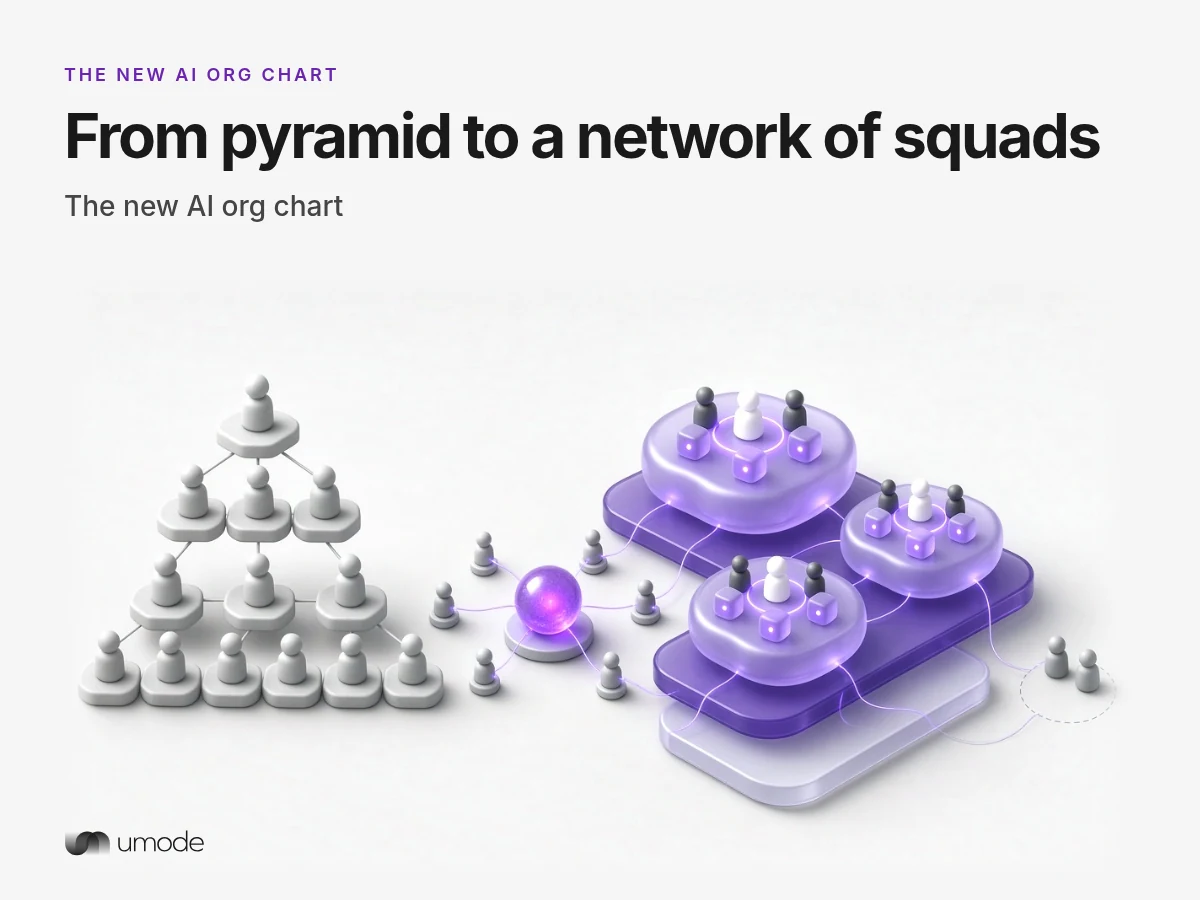
The new AI org chart: the layered structure that supports people, agents and areas
How the org chart changes with AI: from a pyramid by function to layers of users, brains, agents, routines and context, with outcome squads serving the customer.
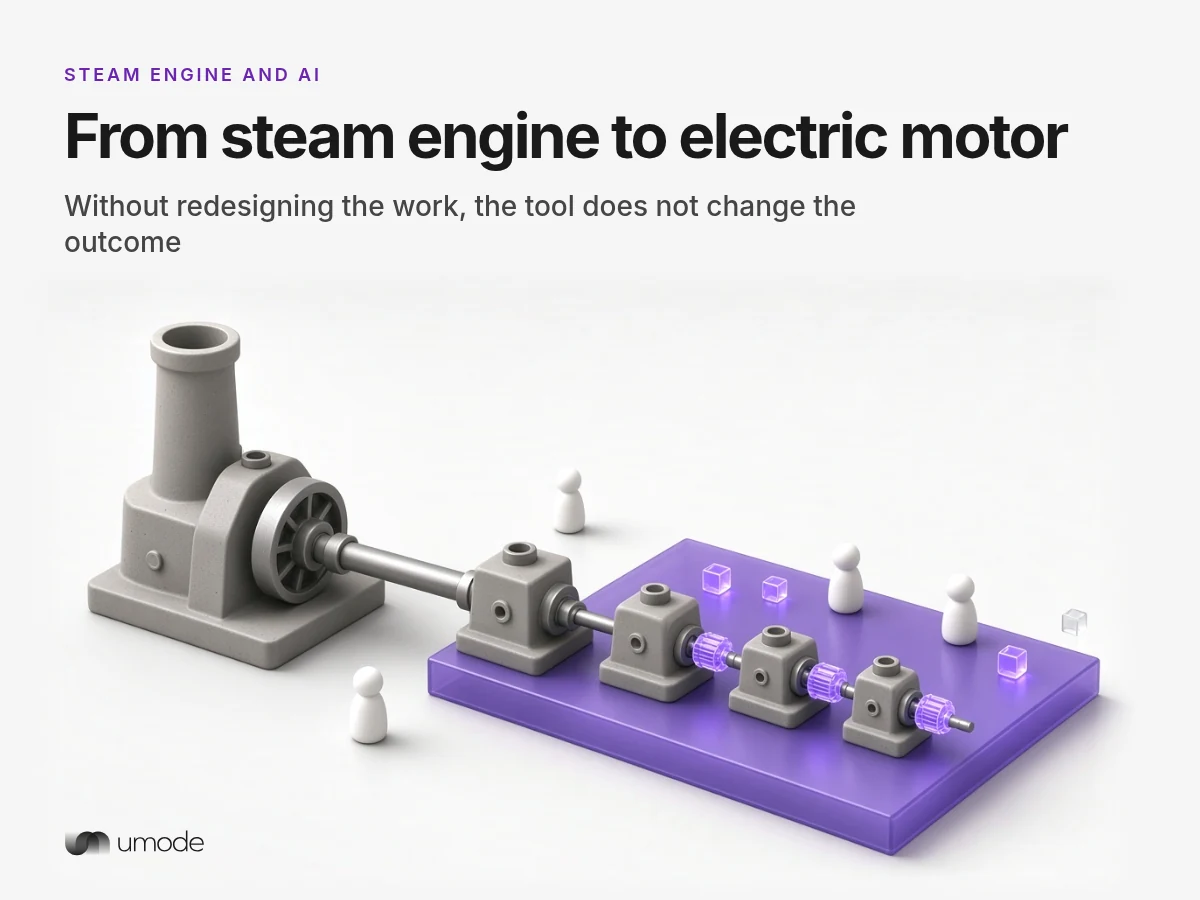
Steam engine, electric motor and AI: without redesigning the work, the tool does not change the outcome
Why AI does not raise productivity on its own: what factory electrification teaches about redesigning work, the J-curve and how to move past tool swaps.
Human approval in AI by maturity stage: who approves what, from Steam to Frontier
Who approves what AI does at each maturity stage: from the person who checks everything to the leader who approves the rule and the exception. Human oversight of agents.
AI maturity self-assessment by area: questions, evidence and how to read the answers
How to measure the AI maturity of each area of the company without a numeric score: the questions by dimension, the evidence that counts and how to read each answer.
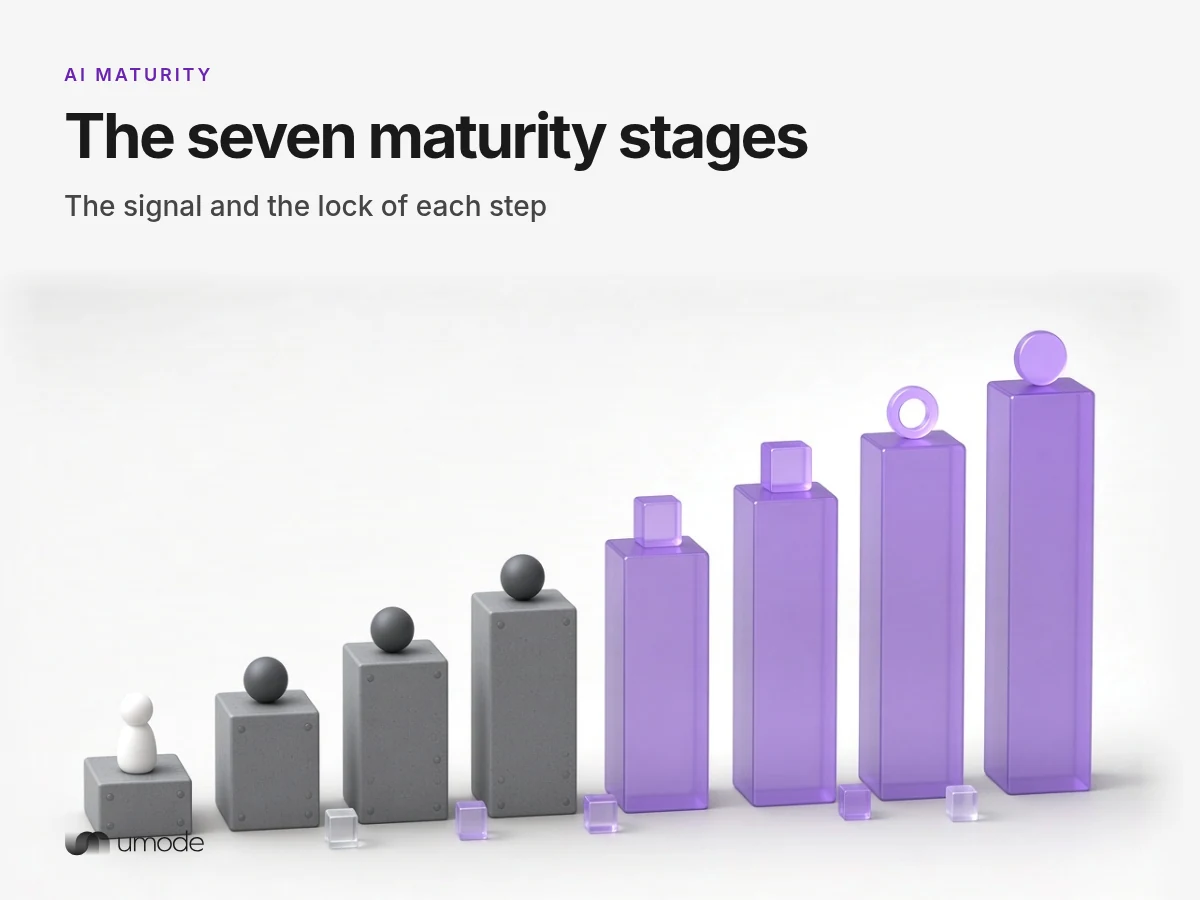
AI maturity stages: the seven steps of the ladder, with the signal and the lock of each
The seven AI maturity stages in fashion companies, from Steam to Frontier: what each one is, the signal that confirms it and what usually blocks the climb.
Quick AI wins by maturity stage: where to start at each point of the ladder
One quick AI win for each maturity stage, from Steam to Frontier: what to do first in a fashion company, how to do it and what to avoid.
AI maturity by department: how to read each area of a fashion company
How to read the AI maturity of each department in a fashion company, from sales to leadership, through the anchor task and the signal of each stage.
AI productivity paradox: why the gain is slow to show up
AI is everywhere and productivity barely moves. See the economists' explanations, the J-curve and how to measure the gain from AI without fooling yourself.
Signs the company only swapped the engine: how to know whether AI is paying off
AI was bought, everyone uses it and nothing changed? See the observable signs that the company only swapped the engine and what to do after finding them.
One motor per machine, one agent per task: how to split the work among AI agents
Why a single assistant for everything repeats the shaft of the steam factory, and how to split the area's work into AI agents per task, with a rule and a brake.
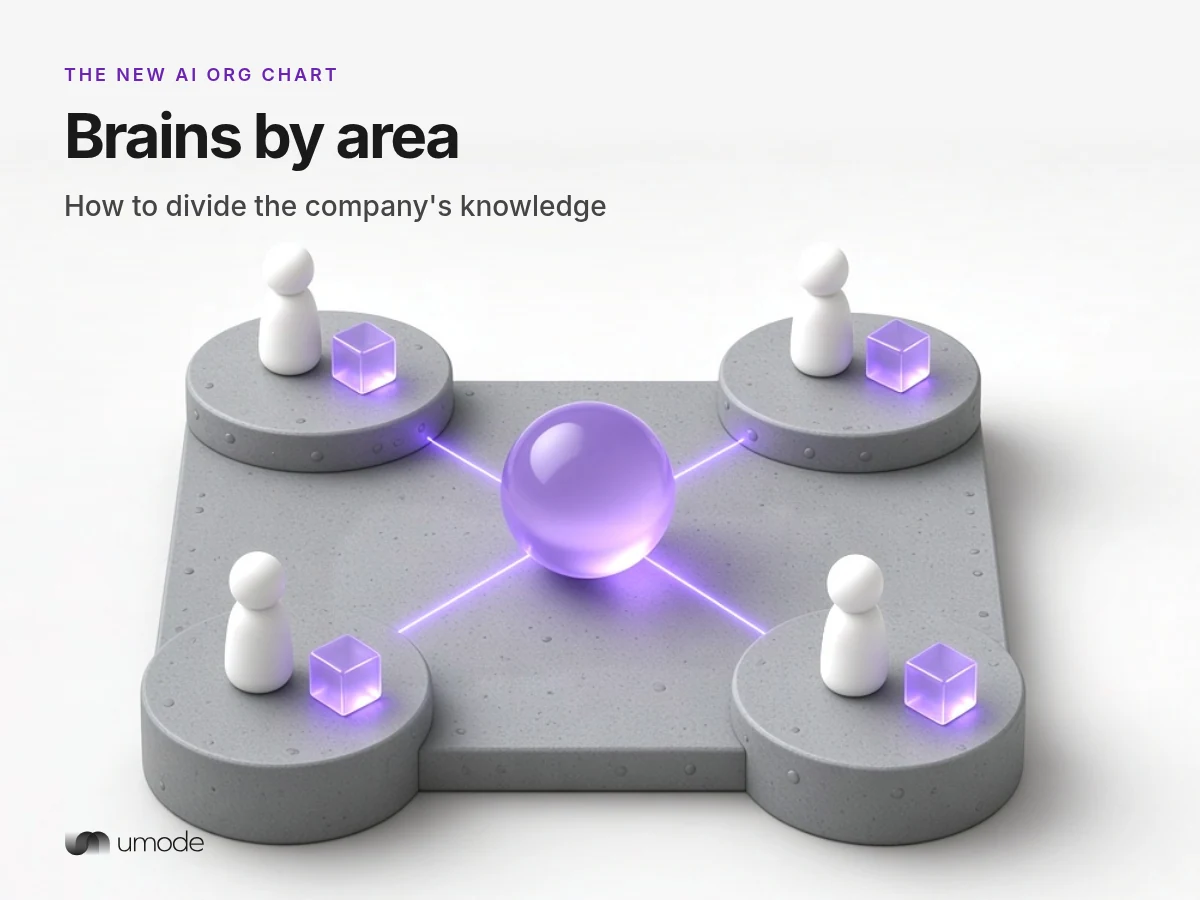
Brains by area: how to divide the company's knowledge
An area Brain is the knowledge base of each area of the company, with an owner and rules for reading and editing. See how to divide it, what goes in and where to start.
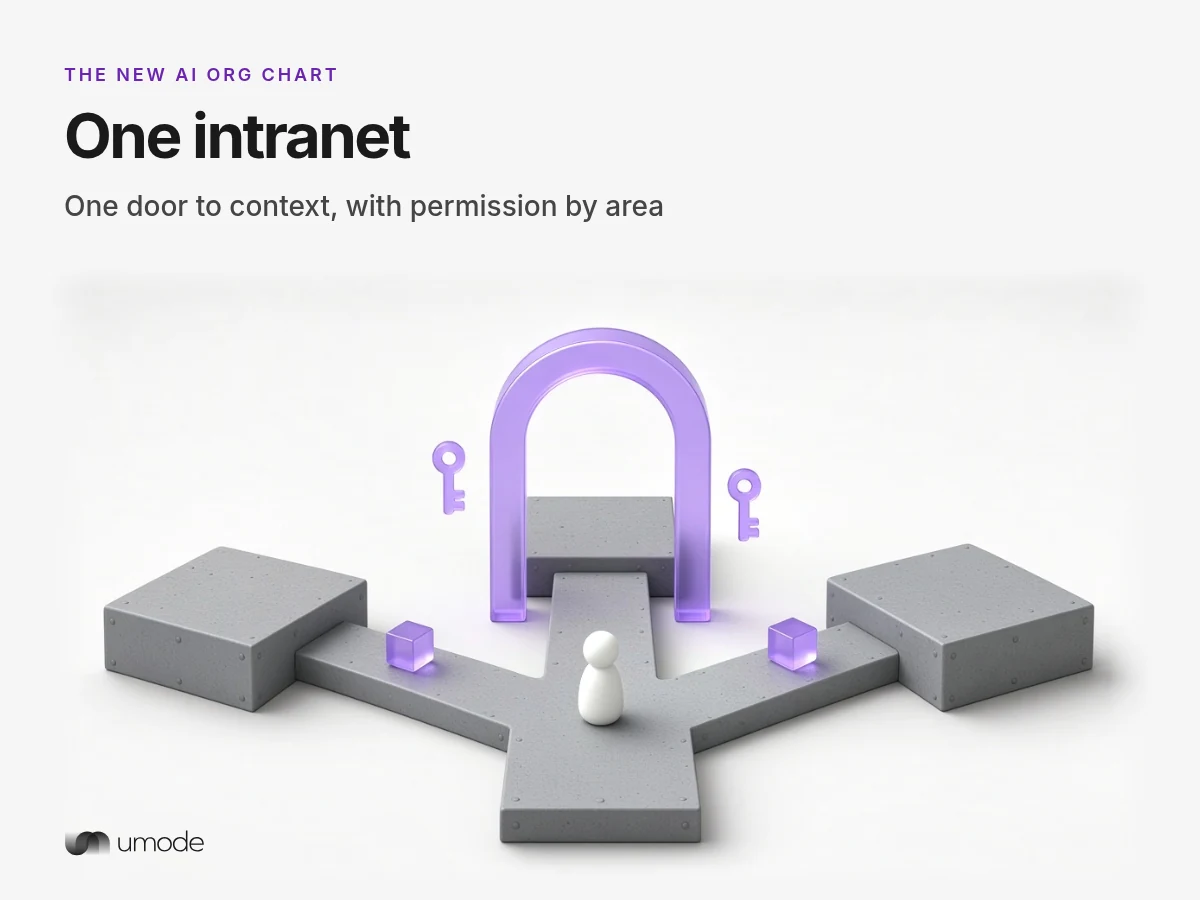
Single intranet with permission by area: one door to the company's context
A single AI intranet brings what the company knows into one door, and each person sees what their area allows. See how to bring the places together and define permission.
Onboarding with required context: how to welcome new people with AI
AI onboarding starts with the required context of each area: rules, terms, systems and limits. See how to build the list and cover gaps item by item.
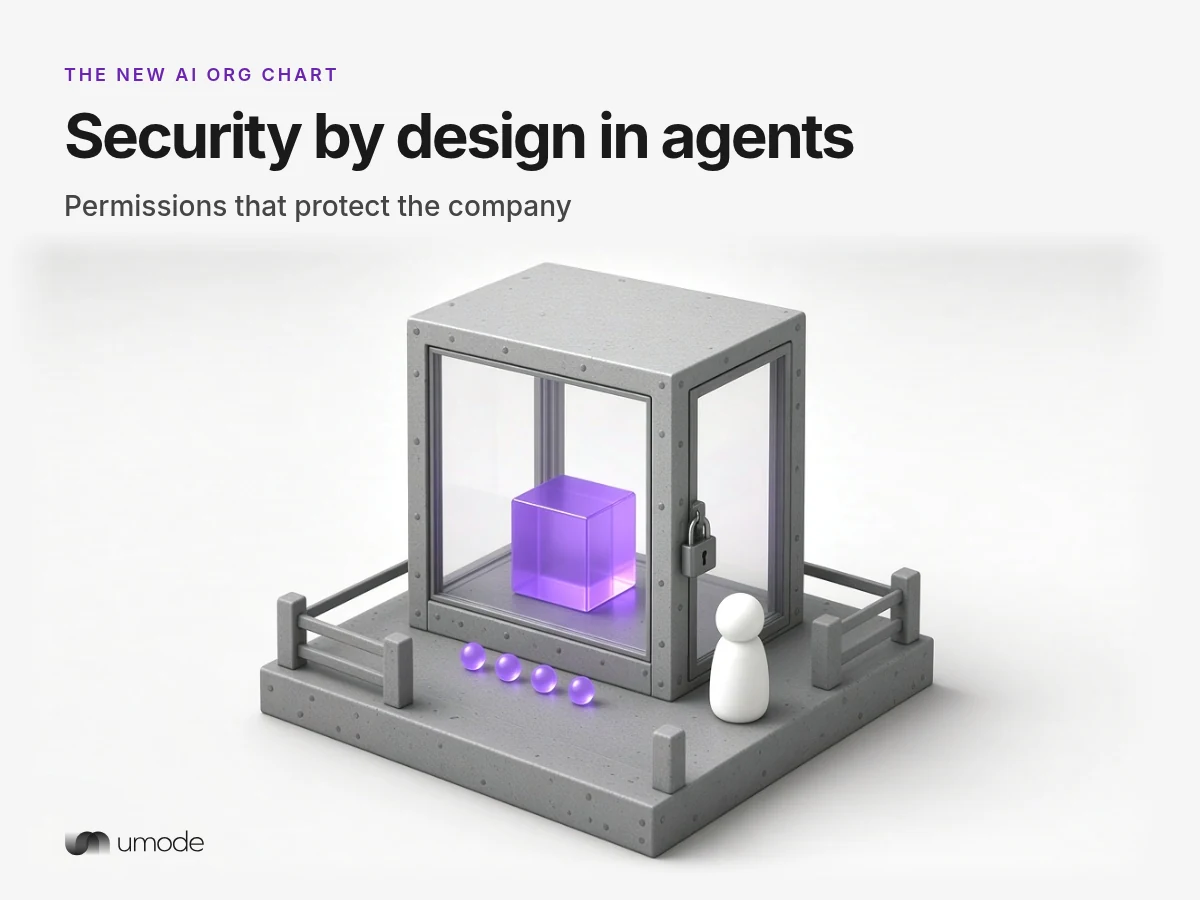
Security by design in AI agents: permissions that protect the company
Security by design in AI agents: wide reading, narrow editing, minimal and named execution. See how to set up permissions before turning the agent on.
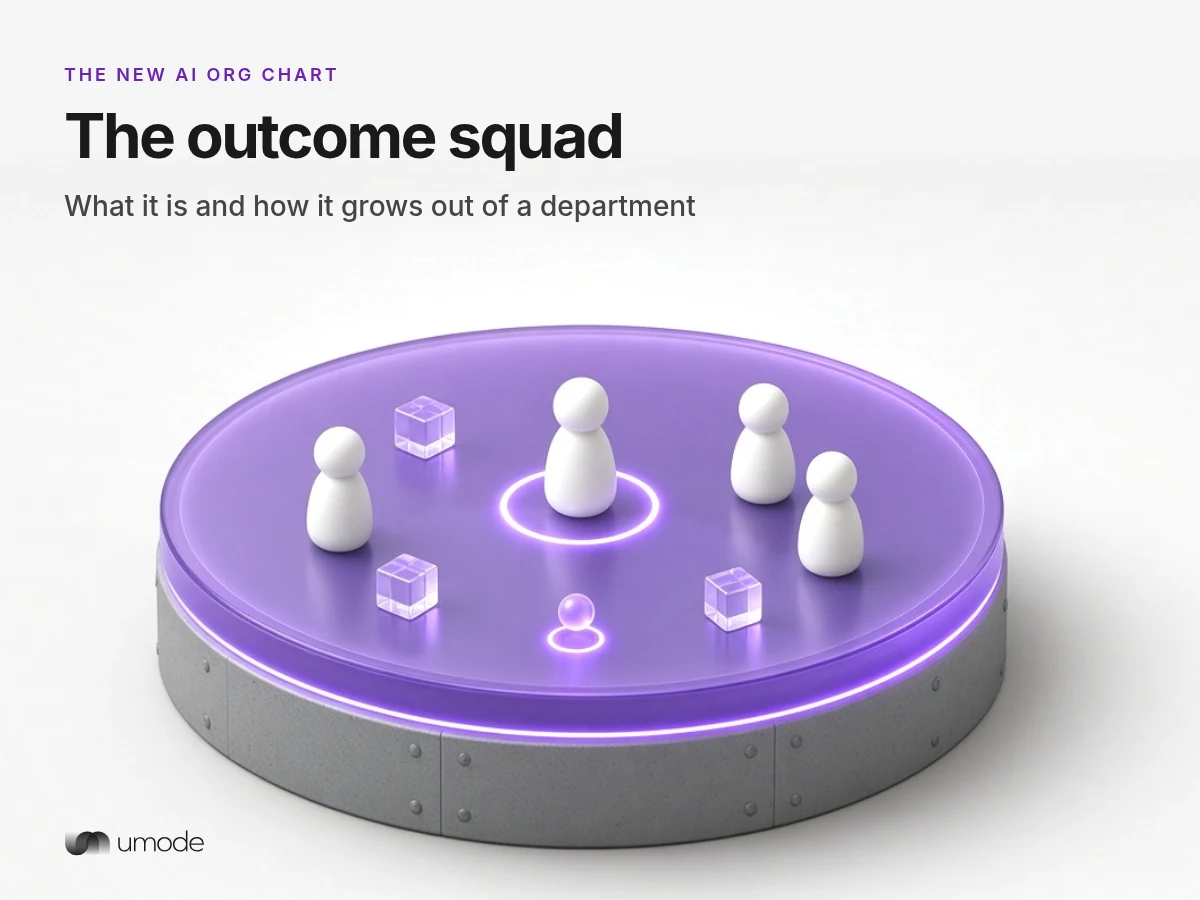
Outcome squad: what it is and how it grows out of a department
An outcome squad brings people and AI agents together around a result that reaches the customer. See how it grows out of a department, step by step.
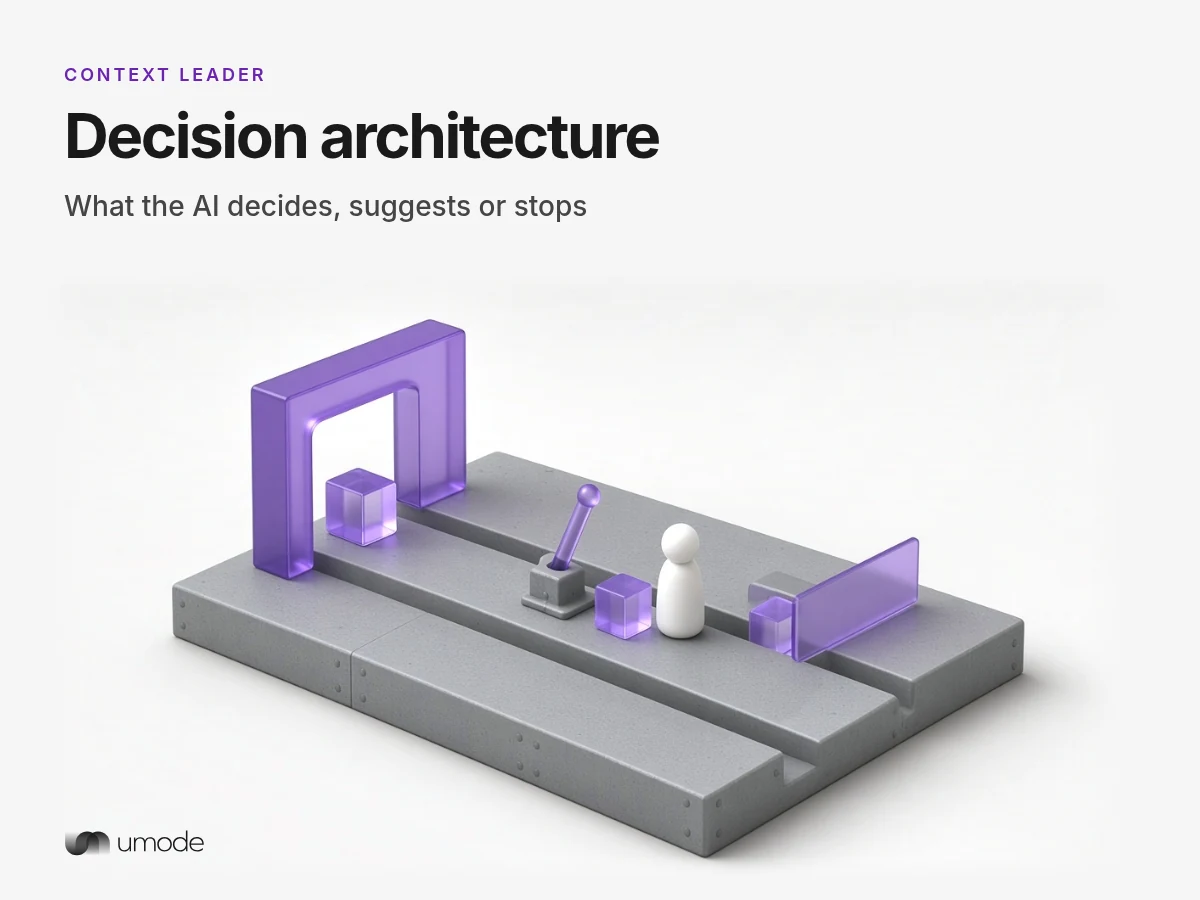
Decision architecture: what the AI decides, suggests or stops
How to write the three-column list that says what the AI agent decides alone, what it suggests and what waits for human approval, with a test set.
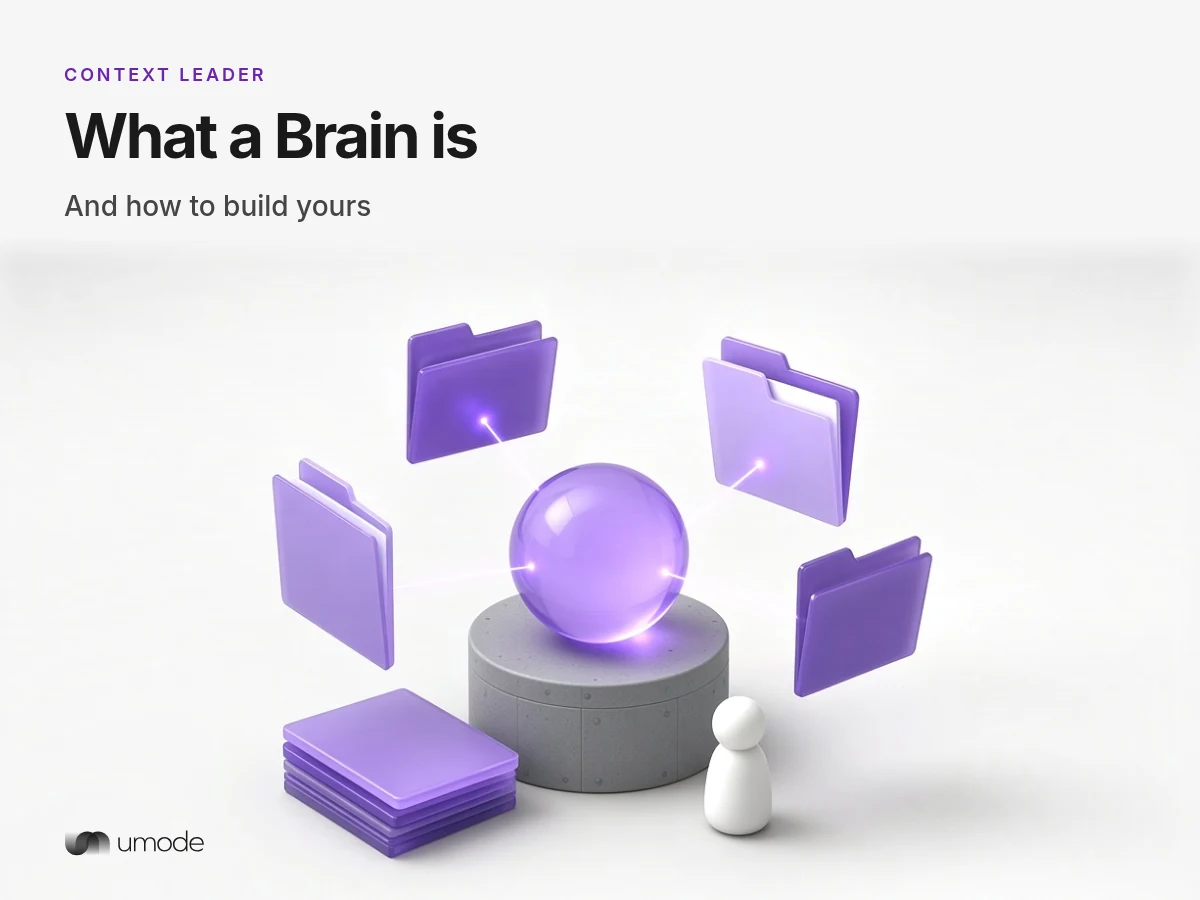
What a Brain is and how to build yours
A Brain is the text folder the AI reads before answering and updates afterward. See the minimal folder, the rules file, the first week and what never goes in.
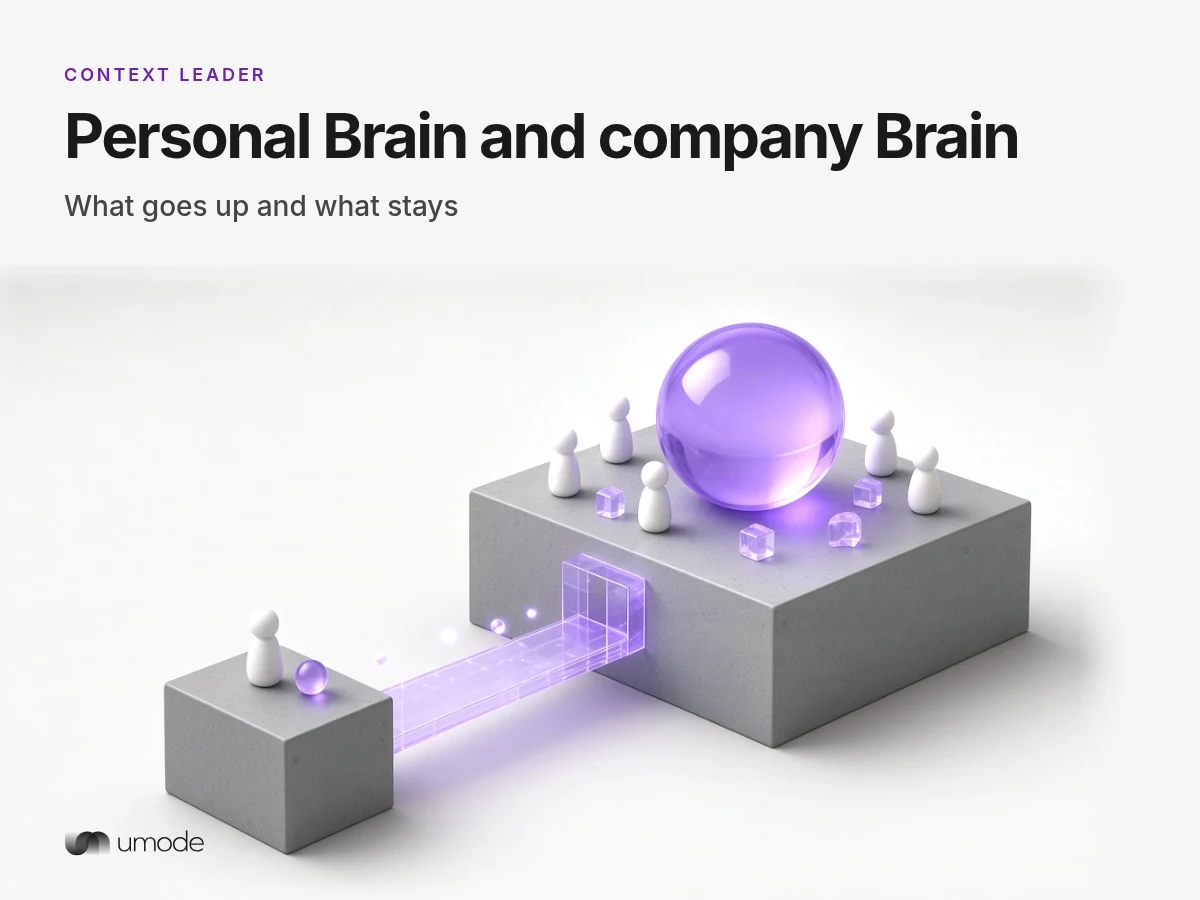
Personal Brain and company Brain: what goes up and what stays
How the personal Brain connects to the company Brain: reading order, what goes up to the area, what stays with you, the right account and the permission test.
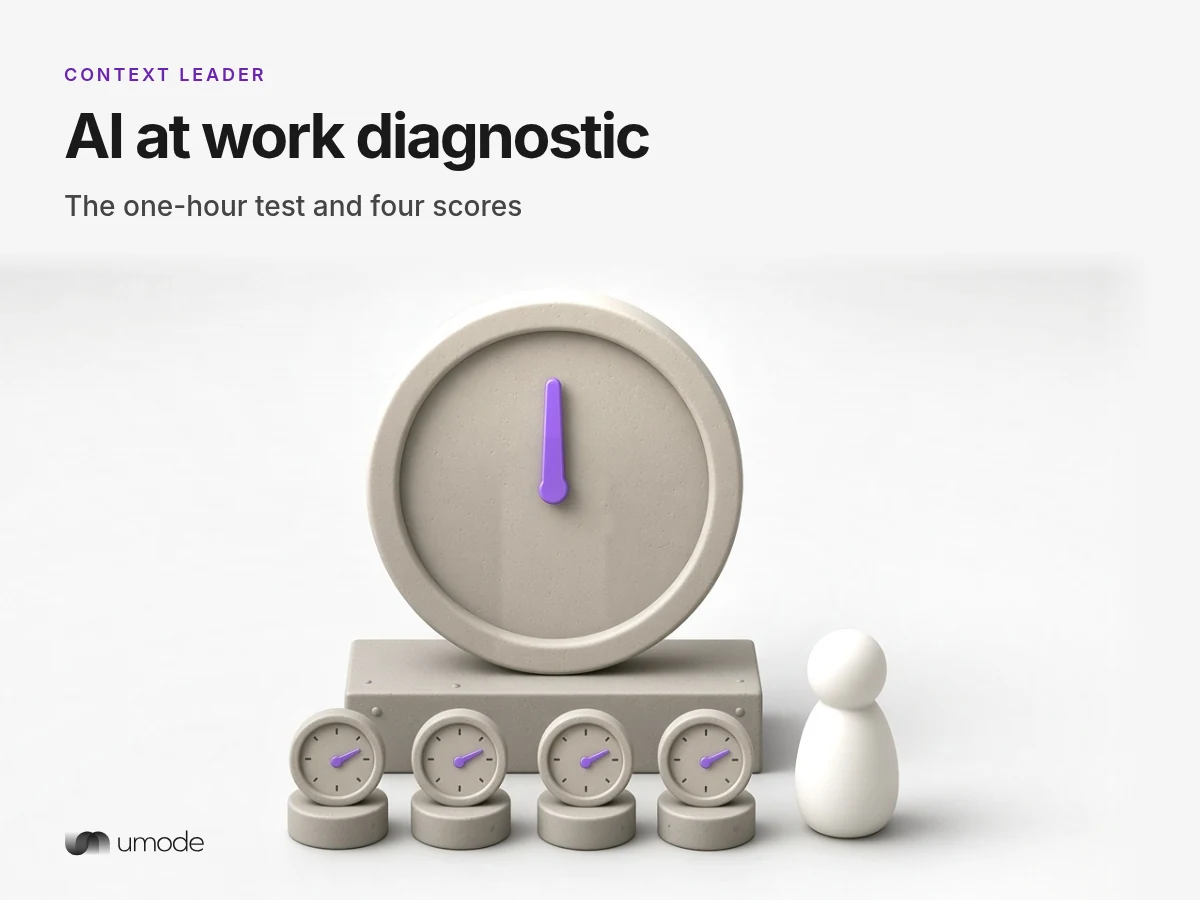
AI at work diagnostic: the one-hour test with four scores
How to take the AI at work self-test in one hour: the four scores from 1 to 5, the score ranges, the three signs of the Executor and what to do next.
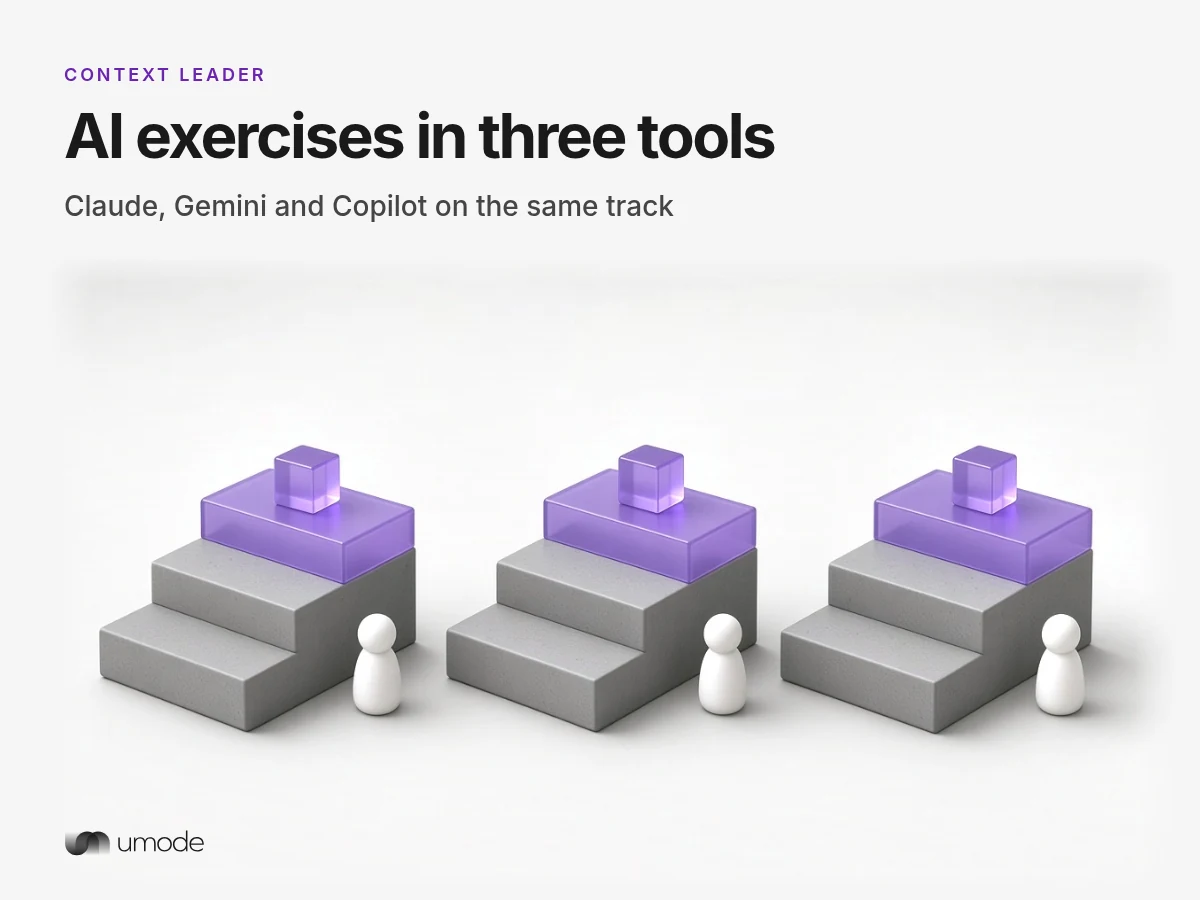
AI exercises in Claude, Gemini and Copilot: what the track publishes in each tool
What the Context Leader Track publishes as exercises in Claude, Gemini and Copilot: how many there are in each, what changes and plan B for the Microsoft version.
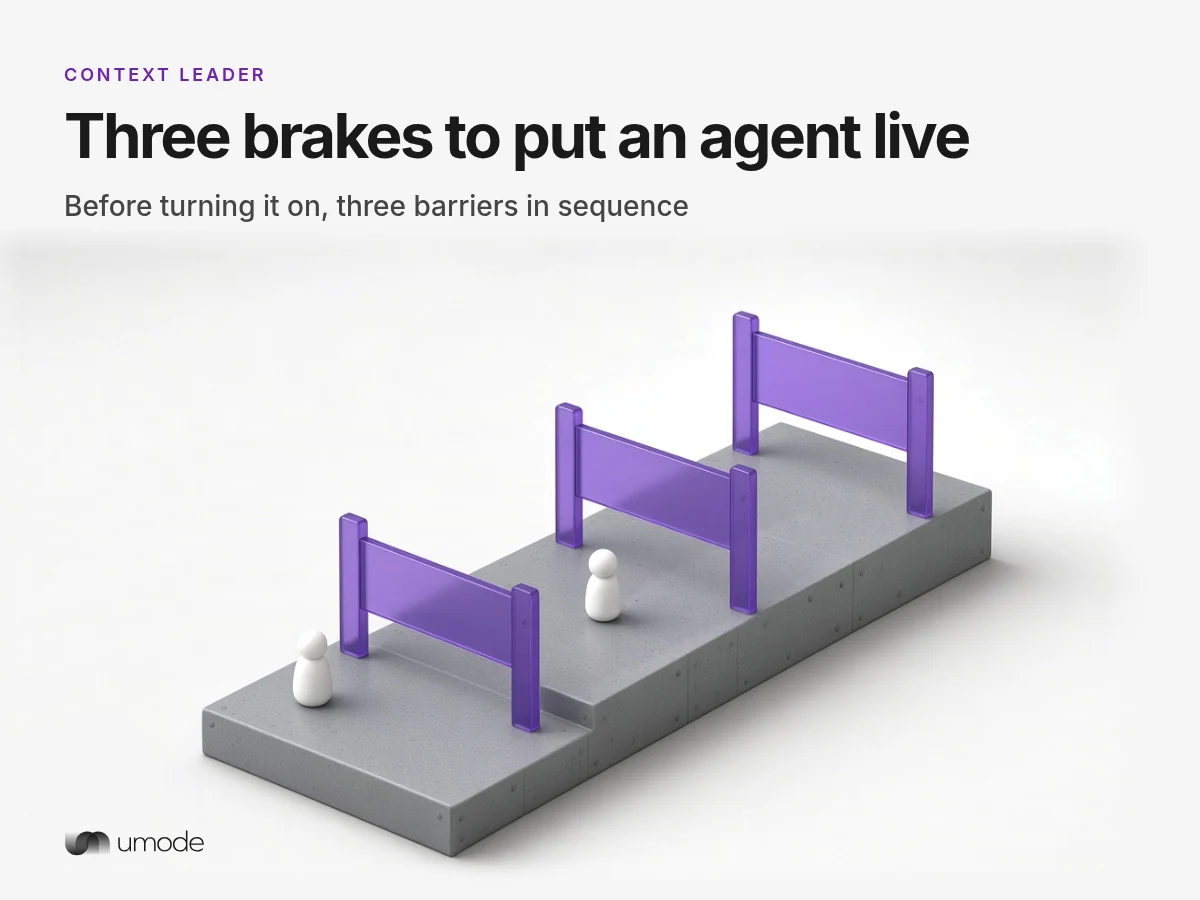
Three brakes to put an agent live
Stop limit, clear trigger and approval stop: how to put an AI agent live with separate permissions, a trace you read and the source in plain view.
Six-field instruction: from text to a piece another area uses
Goal, input, rule, exception, done criterion and output: how to write the instruction someone else uses without you and when it becomes an area piece.
Context levels: from C0 to C3, with the proof of each
The four levels of context for AI in the company: what to seed first, how a meeting becomes a decision note, the proof of C2 and C3 and the owner of each layer.
Five-part request: how to ask AI and catch the error early
Role, goal, context, format and criterion: how to build a good request for AI, check the answer without redoing everything and catch the error before the decision.
First AI agents: how to build the first one, with goal, context, tools and brake
How to build your first AI agent: the four parts of the fixed agent, agent or automation, agents in sequence and the safety rules.
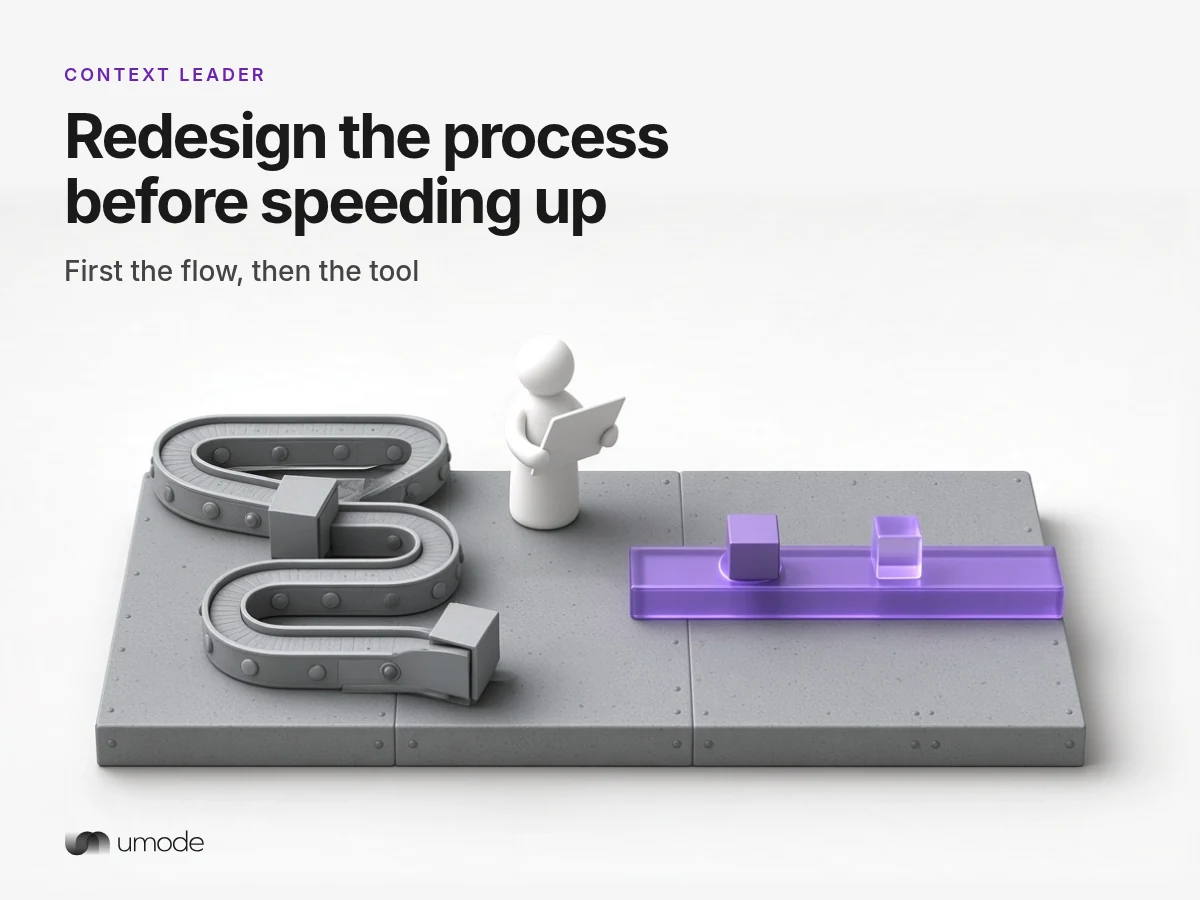
Redesign the process before speeding up
How to map the process without makeup, separate coordination from execution, eliminate the step that does not need to exist and capture context in thirty seconds.
Want to apply this to your operation?