Fast fashion: what it is, how it works and what its impacts are
Fast fashion is quick-turnaround fashion: large-scale production and constant novelty. See the meaning and definition, the consumer's role, the size run limits, the impacts and the difference from slow fashion.
On this page
- Fast fashion: what is the meaning and definition?
- How does the consumer take part in creating garments?
- Does low price define fast fashion?
- What does a narrow size run mean and why does a flexible supplier matter?
- What are the impacts of fast fashion?
- What is the difference between fast fashion and slow fashion?
- What are the most common questions about fast fashion?
Fast fashion is the fashion model of fast, large-scale production of clothing and accessories at low prices, with constant novelty that encourages frequent purchases.
Fast fashion: what is the meaning and definition?
Fast fashion means quick fashion: clothing made and renewed at speed.
The model joins production at scale with constant renewal of products, and this encourages frequent purchases. The definition brings together four elements: speed, scale, low prices and novelty in a continuous flow (The Fast Fashion Paradox, pp. 1 and 2).
How does the consumer take part in creating garments?
In fast fashion, consumers' choices are immediately incorporated into the design of new products.
The creative process of the model is continuous: it does not stop between one garment and the next, and what the public chooses goes back into creation (UFU, p. 5).
Does low price define fast fashion?
For Cietta, cited by Sebrae, what characterizes the model is the consumer's participation in defining the product, and affordable pricing is not a rule.
The bulletin's general definition includes low prices. Cietta's reading shifts the criterion: what matters is who takes part in defining the product (Sebrae, 2014, p. 5).
What does a narrow size run mean and why does a flexible supplier matter?
A narrow size run and the difficulty of finding flexible suppliers for small lots are among the disadvantages of the model.
A narrow size run is the offer of few sizes, which prevents serving everyone. In small lots, the supplier needs to be flexible, and finding one like that is hard (Sebrae, 2014, pp. 5 and 6).
What are the impacts of fast fashion?
The impacts of fast fashion are waste of resources, pollution and poor working conditions (The Fast Fashion Paradox, p. 2).
The bulletin describes them as negative externalities of the model. Speed is what the business does. Waste and precarious labor are what come with it.
What is the difference between fast fashion and slow fashion?
Fast fashion has constant renewal of products; slow fashion has quality and longevity of garments.
Slow fashion values local production, quality and longevity, and appears next to the secondhand clothing trade as a form of resistance to fast fashion (The Fast Fashion Paradox, p. 5). The deeper dive is in the article Slow fashion and fast fashion: get to know these two concepts and their differences.
What are the most common questions about fast fashion?
What is fast fashion?
Fast fashion is quick fashion: fast, large-scale production of clothing and accessories, with constant novelty that encourages frequent purchases.
What is the difference between fast fashion and slow fashion?
Fast fashion combines speed, scale and constant renewal. Slow fashion values local production, quality and the longevity of garments. See the article on the two concepts.
What are the impacts of fast fashion?
The impacts of fast fashion are waste of resources, pollution and poor working conditions, described as negative externalities of the model.
Speed and cost go together in fast fashion. For uMode resources, visit the tools page (in Portuguese).
Verified facts
- Fast fashion is a business model of fast, large-scale production of clothing and accessories at low prices, with constant novelty that encourages frequent purchases.
Source: sites.usp.br ↗ - In fast fashion, the creative process is continuous and consumers' choices are immediately incorporated into the design of new products.
Source: repositorio.ufu.br ↗ - Sebrae pointed out in 2014, as disadvantages of the model, the narrow size run, which prevents serving every size, and the difficulty of finding flexible suppliers for small lots.
Source: bibliotecas.sebrae.com.br ↗ - The bulletin The Fast Fashion Paradox describes waste of resources, pollution and poor working conditions as negative externalities of the model.
Source: sites.usp.br ↗ - Slow fashion and the secondhand clothing trade appear as forms of resistance to fast fashion that value local production, quality and the longevity of garments.
Source: sites.usp.br ↗ - For Cietta, cited by Sebrae in 2014, affordable pricing is not a rule of fast fashion; the consumer's participation in defining the product is what characterizes the model.
Source: bibliotecas.sebrae.com.br ↗
Related entries
Collection drop
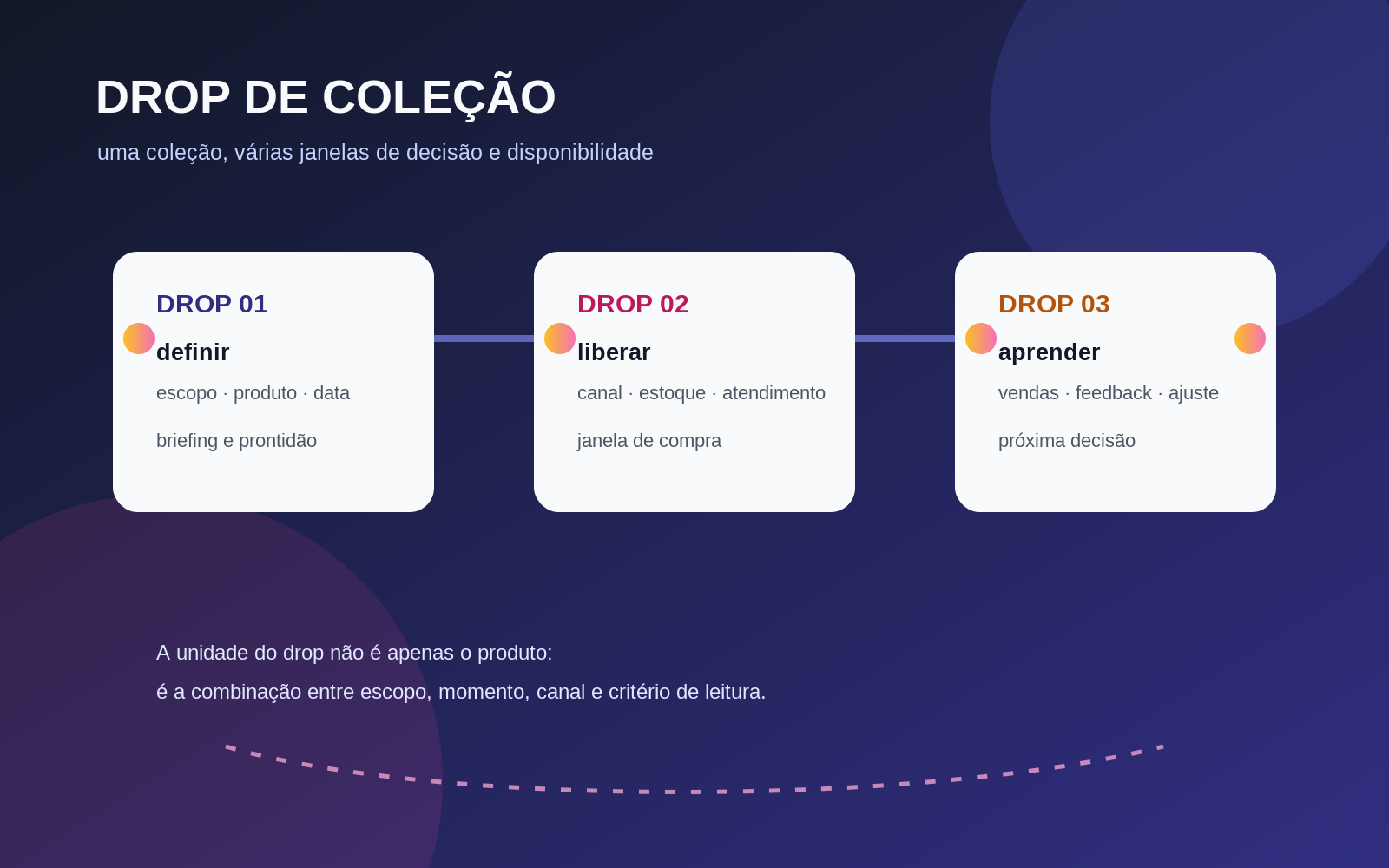
A collection drop is a paced launch process: a defined group of products is prepared and made available in a specific window, with explicit scope, channel, readiness and learning criteria. In streetwear vocabulary, the term also refers to very limited-edition capsule collections released through scarcity and social media.
How to reduce fashion time to market
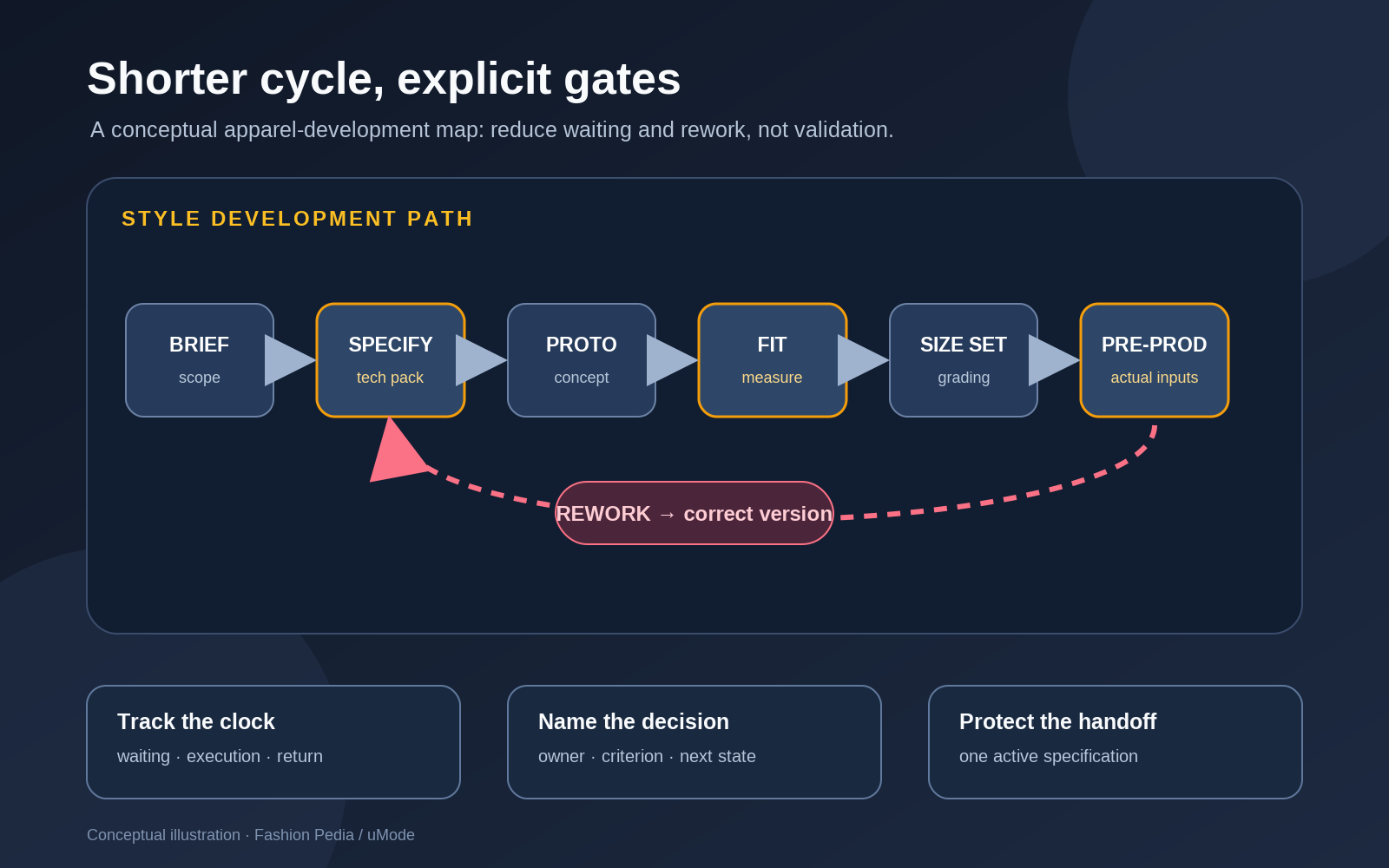
How to reduce fashion time to market: make each style’s waits, approvals, and returns visible. A shorter workflow starts with a testable specification, samples named by purpose, acceptance criteria, and an unambiguous handoff between product, patternmaking, engineering, and the supplier.
Textile and apparel supply chain
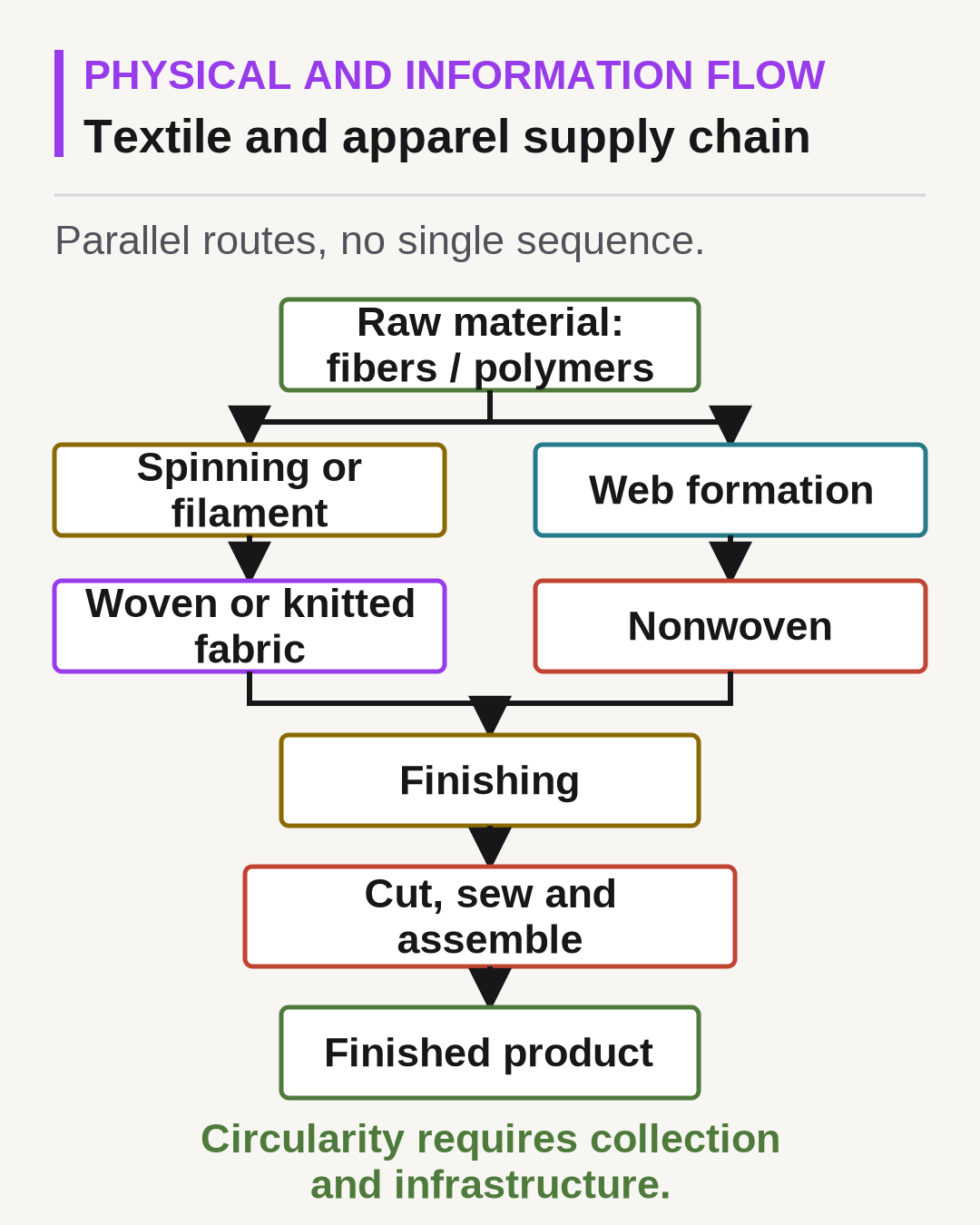
The textile and apparel supply chain transforms natural or manufactured raw materials into yarns, woven or knitted fabrics, and then finished articles. Its reference flow covers fibres, spinning, material formation, wet processing, cutting and assembly, while the real system also includes suppliers, subcontracting, distribution, use and recovery routes.
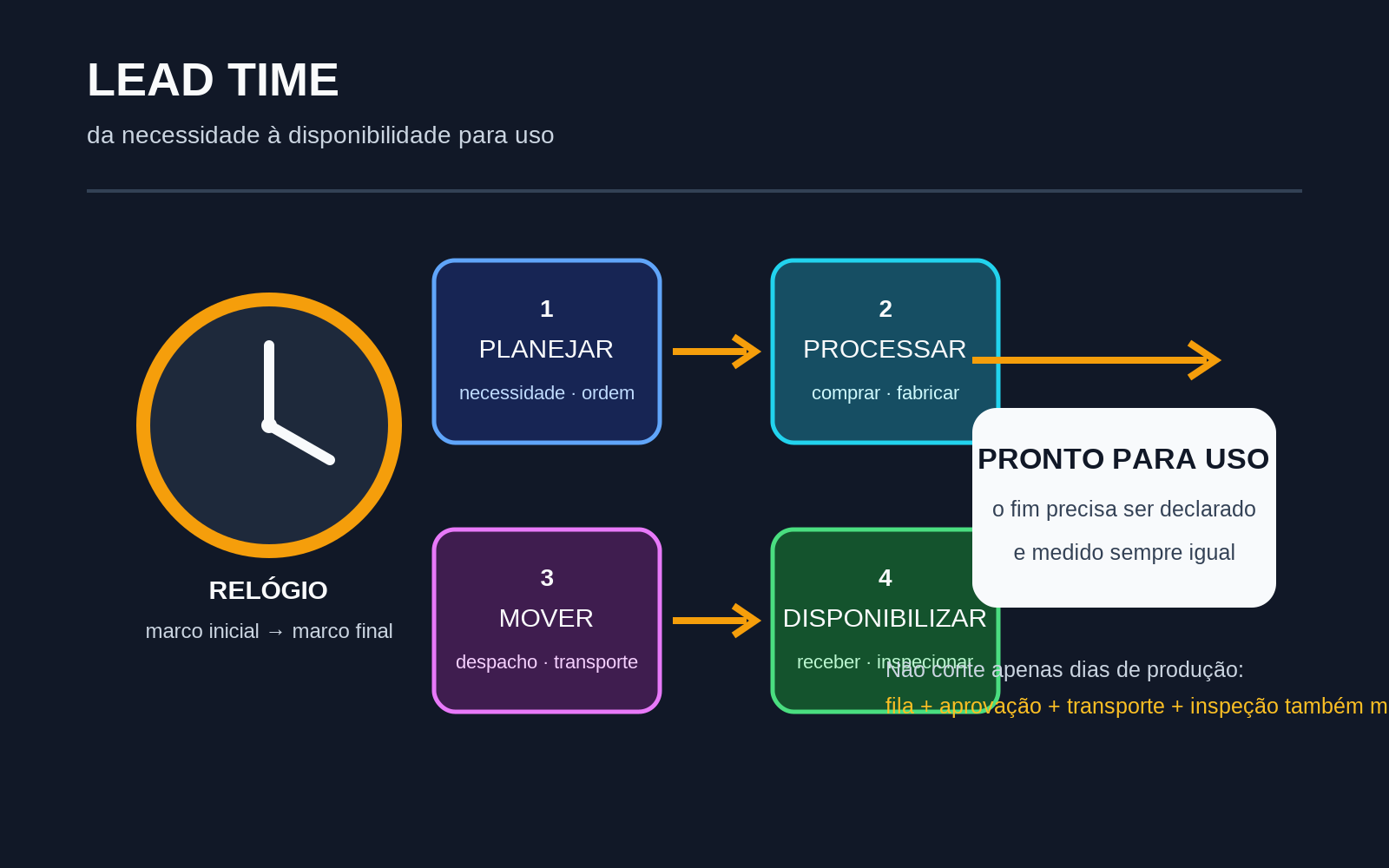
Lead time in the fashion supply chain
Lead time in the fashion supply chain. Lead time in a fashion supply chain is the elapsed time between defined operational milestones, such as ordering and receipt or design and production. A useful measure states its object, start, end, waiting periods, calendar, unit and availability condition.
Sources
- https://sites.usp.br/boletimoipp/wp-content/uploads/sites/823/2024/07/O-paradoxo-do-Fast-Fashion.pdf
- https://repositorio.ufu.br/bitstream/123456789/37774/1/CrescimentodoModelodeProdu%c3%a7%c3%a3o
- https://bibliotecas.sebrae.com.br/chronus/ARQUIVOS_CHRONUS/bds/bds.nsf/84f335cf0a92c75d356512b9ec15f0ec/$File/2014_08_22_RT_Julho_Varejo_FastFashion_pdf.pdf
Want to apply this to your operation?