Sleeve types: what they are, how to identify them and how to describe them on the spec
Learn to tell set-in, raglan and kimono sleeves apart, recognize puff and batwing sleeves, and see how to describe the sleeve on the garment spec.
On this page
Sleeve types are the ways of building the part that covers the arm in a fashion garment, combining attachment to the body, length and volume.
You send the spec for the Aurora blouse, an invented garment, with "wide sleeve", get back a drawing with the wrong shoulder and stop the approval to explain the seam. You wanted a diagonal to the neckline; the spec only talked about volume, and the adjective passed with flying colors.
What are the basic sleeve types?
There are three: set-in, raglan and kimono, and what separates them is how the sleeve joins the body.
The set-in sleeve, recognized by the sleeve cap fitted into the armhole, is a separate, shaped piece connected to the body by a seam that goes around the arm over the shoulder. On the raglan the piece is also separate, but the seam runs diagonally to the neckline area. The kimono sleeve is cut in one piece with the garment or with part of it, such as a yoke. This trio covers most sleeves (University of Kentucky Extension, FCS2-807, p. 1).
To identify one, follow the point where sleeve meets body in the drawing and only then describe length and volume. Writing just "wide" on the Aurora spec is like recording the color of a skirt and forgetting the panel seam: the field is full and the garment is still undefined.
How does the raglan sleeve work in pattern making?
A raglan sleeve is a separate piece joined to the body by a diagonal seam that runs to the neckline.
Because it continues to the neckline, the shoulder curve has to be given shape, and this is solved with a dart, a seam or gathering. The dart is the most common solution in the one-piece raglan; the seam, in the two-piece raglan. The cut can follow the straight grain or the bias (University of Kentucky Extension, FCS2-807, p. 7).
When reviewing apparel pattern making, look for these devices in the pattern and in the technical drawing, and confirm that the grain direction is written down. The Aurora ends up with a dart and straight grain, a choice for this garment and not for every raglan.
How do you describe the sleeve type on the garment spec?
Write construction, shape and finish in separate fields, so you can compare the spec with the drawing.
You open The Spreadsheet and there it is, in the Aurora column: wide. Whoever wrote it is on vacation. The field was filled in; the decision was still blank. Before resending, swap the adjective for this specification:
| Field | Value |
|---|---|
| Garment | Aurora blouse |
| Sleeve type | Raglan |
| Length | Long, to the wrist |
| Volume | Starts loose at the armhole, narrows from the elbow and ends close at the wrist |
| Attachment to the body | Diagonal seam to the neckline |
| Shoulder shaping | Dart |
| Grain direction | Straight grain |
| Edge finish | Plain hem |
- Replace "wide sleeve" with "raglan" and write where the volume starts and where it ends.
- Draw the diagonal seam to the neckline and mark the dart and the straight grain.
- Compare spec and drawing before releasing the approval.
The table keeps the choices; the drawing shows whether you approve the same sleeve you described.
How do you recognize the puff sleeve and the batwing sleeve?
Look at the shoulder: the puff sleeve has gathering that fills out the sleeve, the batwing has no seam at the shoulder.
The puff sleeve is short, gathered and attached at the shoulder to create a full effect. The batwing, also called dolman, is cut as an extension of the body, with no shoulder seam, with a deep, wide armhole that tapers to the cuff (IFSC Technical Drawing Handbook, p. 7). Because it comes out together with the body, it is a relative of the kimono sleeve.
When you name it, say what appears in the drawing: where the volume starts, where it narrows and how the sleeve meets the body. The name alone invites the adjective back.
What other questions come up about sleeves?
How do you tell a balloon sleeve from a leg-of-mutton sleeve?
The balloon concentrates volume in the upper arm and fits close from the elbow to the wrist. The leg-of-mutton fits close from the wrist to the elbow and grows fuller up to the shoulder, where it is gathered or pleated and attached to the bodice (IFSC Technical Drawing Handbook, p. 7).
What is a flap sleeve?
It is a small, triangular sleeve that forms a stiff little flap or falls over the arm.
A well-named sleeve is one that reaches the supplier without needing a translation.
Verified facts
- The technical literature groups most sleeves into three basic types: set-in (also called a fitted sleeve or sleeve cap), raglan and kimono.
Source: publications.ca.uky.edu ↗ - The set-in sleeve is a separate, precisely shaped piece, joined to the body by a seam that goes around the arm over the shoulder.
Source: publications.ca.uky.edu ↗ - The raglan sleeve is a separate piece, joined to the body by a diagonal seam that extends to the neckline area.
Source: publications.ca.uky.edu ↗ - The kimono sleeve is cut in one piece with the garment or with part of it, such as a yoke.
Source: publications.ca.uky.edu ↗ - In the raglan sleeve, the shoulder curve is shaped by a dart, a seam or gathering; the dart is more common in the one-piece raglan and the seam in the two-piece raglan.
Source: publications.ca.uky.edu ↗ - The raglan sleeve can be cut on the straight grain or on the bias.
Source: publications.ca.uky.edu ↗ - The dolman sleeve, also called a batwing sleeve, is cut as an extension of the body, with no shoulder seam, with a deep, wide armhole that tapers to the cuff.
Source: wiki.ifsc.edu.br ↗ - The puff sleeve is short, gathered and attached at the shoulder to create a full effect.
Source: wiki.ifsc.edu.br ↗ - The balloon sleeve has volume in the upper arm and fits close from the elbow to the wrist; the leg-of-mutton sleeve fits close from the wrist to the elbow and grows fuller up to the shoulder, where it is gathered or pleated and attached to the bodice.
Source: wiki.ifsc.edu.br ↗ - The flap sleeve is small and triangular, forming a stiff little flap or falling over the arm.
Source: wiki.ifsc.edu.br ↗
Related entries
Garment patternmaking
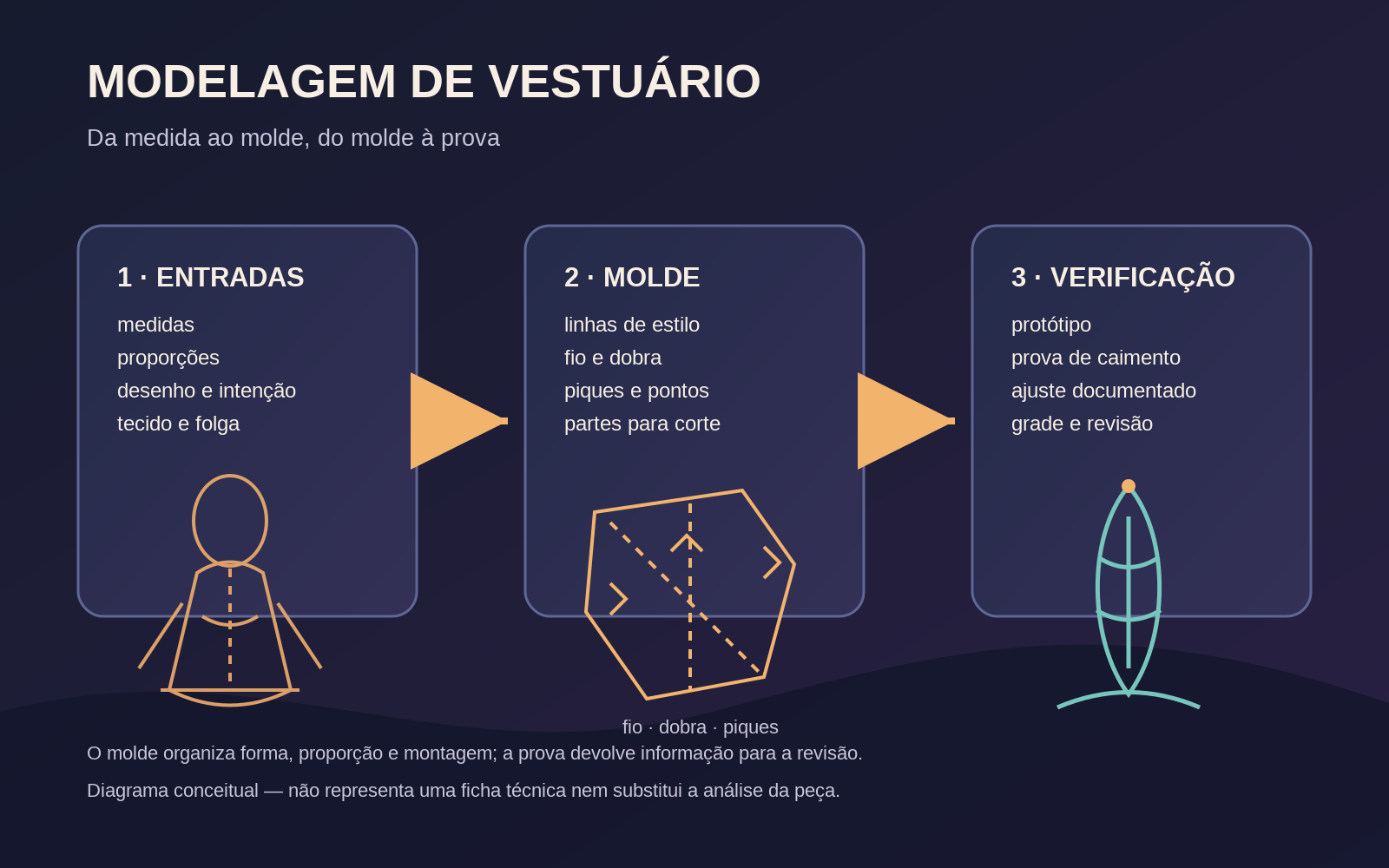
Garment patternmaking is the technique of turning measurements, proportions, and design intent into patterns used to cut and assemble a garment. It connects a block, flat pattern construction or draping with fabric information, production markings, fitting, alterations, and grading; the result is a testable development basis, not an automatic guarantee of fit.
Size grading
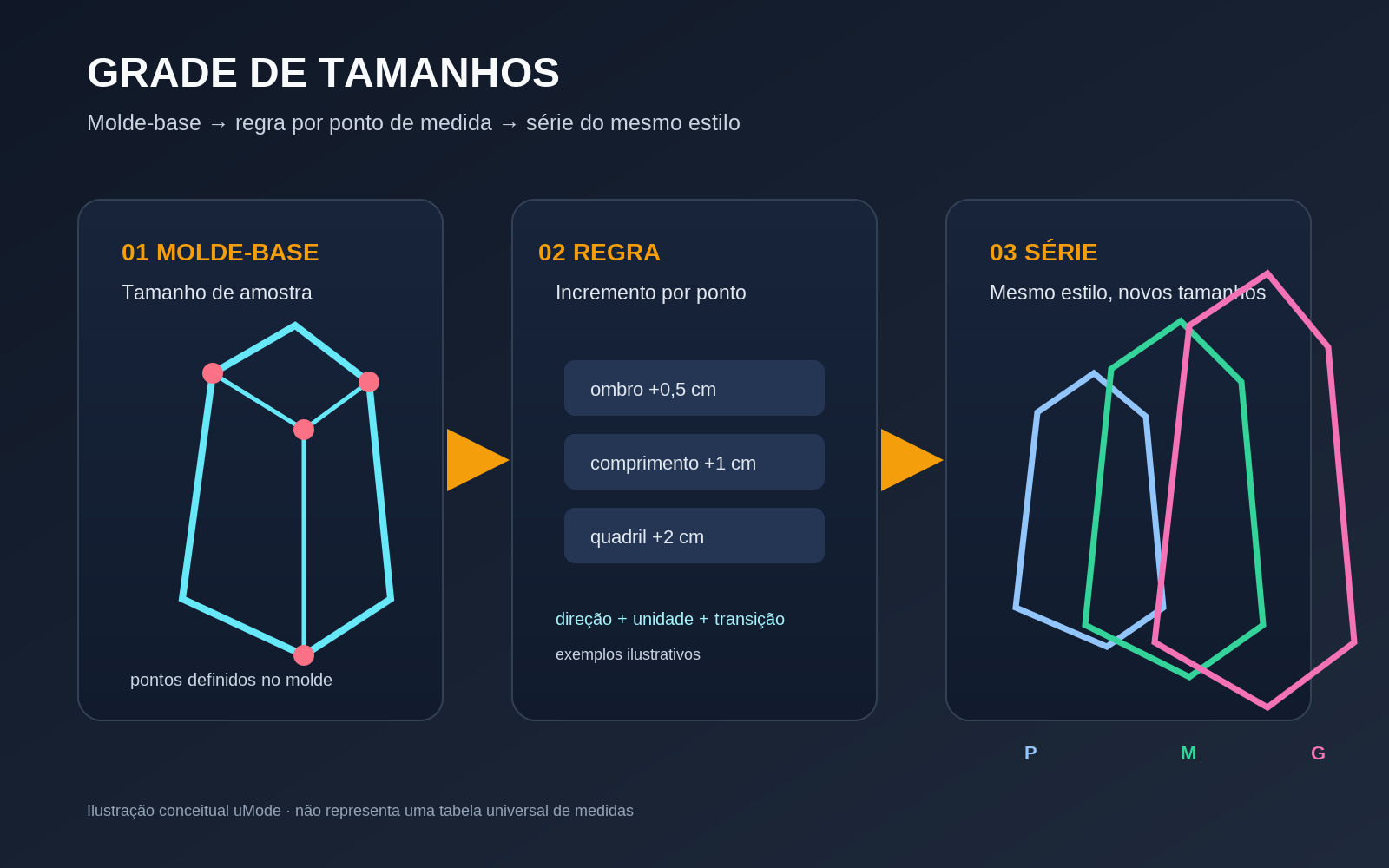
Size grading is the process of turning base-size or sample-size patterns into additional sizes by using a specification sheet or grading increments. A rule changes defined points on the pattern to form a size range for the same style; it does not replace patternmaking or create a new shape.
Sources
Want to apply this to your operation?