What are the types of fabric? Woven, knit and nonwoven in the fashion industry
Tell woven, knit and nonwoven fabric apart, separate structure from fiber and see a filled-in spec with purchase in kg, width, weight and yield.
On this page
- What are the types of fabric used in the fashion industry?
- How do you tell woven, knit and nonwoven fabric apart?
- Are cotton and linen types of fabric or fibers?
- What should you note on the spec to buy fabric by the kilo?
- What changes in spreading when the garment is knit?
- What other questions still come up?
The types of fabric used in the fashion industry are three, separated by construction: woven fabric, knit and nonwoven.
Imagine the Aurora, an invented t-shirt: you send the spec with "cotton" in the fabric field, the supplier sends back the question "woven or knit?" and the order sits until someone decides.
What are the types of fabric used in the fashion industry?
There are three: woven fabric, knitted fabric and nonwoven.
The 2012 guide to lingerie manufacturing standards presents three forms of textile surface: woven, knit and nonwoven (Implementation Guide: standards for lingerie manufacturing, p. 16). The classification answers how the material was built.
On the Aurora, "cotton" answered about the raw material, and the supplier asked about the structure. It is like ordering a dress by color alone: the information exists, but the whole pattern was left open.
How do you tell woven, knit and nonwoven fabric apart?
The difference is in what holds the material together: crossed yarns, loops or bonded layers of fibers.
Woven fabric crosses at right angles the lengthwise yarns, the warp, with the widthwise ones, the weft. Knit comes from loop formation. Nonwoven comes directly from layers of fibers joined by physical and/or chemical means, in a continuous sheet with no loom (Production Process Management, pp. 33, 35 and 36).
Reserve a field on the spec just for structure. If the proposal moves from woven to knit, the change shows up on paper instead of hiding in a generic name.
Are cotton and linen types of fabric or fibers?
They are natural fibers; woven, knit and nonwoven describe the construction of the surface.
The 2012 guide puts cotton and linen among the natural fibers, viscose, acetate and lyocell among the manmade ones, and polyester, polyamide and acrylic among the synthetic ones (Implementation Guide: standards for lingerie manufacturing, p. 9). For the Aurora, "cotton knit" settles the two questions the spec used to mix up.
What should you note on the spec to buy fabric by the kilo?
Note structure, fiber, purchase quantity, width, weight and yield, always next to the garment identification.
Fabric weight (gsm) is mass per square meter. First, the wrong calculation on the spec: you divided 10,000 g by 200 g/m², got 50 and announced 50 meters. That was area, with no width at all. The right calculation multiplies the weight by the width to find the linear weight and divides the mass purchased by it, with compatible units. The width also weighs on marker fit, on cutting losses and on cost (Implementation Guide: standards for lingerie manufacturing, pp. 20 and 21).
| Field | Value |
|---|---|
| Garment | Aurora t-shirt |
| Structure | Knit |
| Fiber | Cotton |
| Purchase quantity | 10 kg (22 lb) |
| Width | 2 m (79 in) |
| Fabric weight | 200 g/m² (5.9 oz/yd²) |
| Linear yield | 2.5 m/kg |
| Corresponding length | 25 m |
The Spreadsheet, which kept only the word "cotton" in a cell with the air of having settled everything, gains seven more lines and loses its poise. The length in the table describes the material purchased; to know how many t-shirts come out of it, you still need the garment's consumption.
What changes in spreading when the garment is knit?
Knit needs rest before the cutting table.
Knits and fabrics with elasticity can shrink back from roll tension, so they rest unrolled and are laid out without stretching (Production Process Management, p. 19). If you stretch the knit on the spreading table to make it fit, it shrinks after cutting and the garment comes out smaller than the pattern.
What other questions still come up?
Is knowing the fabric is cotton enough to define the care label?
No. The care code is based on the fiber type, the fabric construction and the trims used (Implementation Guide: standards for lingerie manufacturing, p. 11).
Does nonwoven have warp and weft?
No. Nonwoven comes from layers of fibers joined by physical and/or chemical means, with no loom, so there is no warp or weft.
Before becoming a t-shirt, the Aurora has to become a sentence the supplier does not have to guess.
Verified facts
- The Implementation Guide: standards for lingerie manufacturing (2012) presents three forms of textile surface: woven fabric, knitted fabric and nonwoven.
Source: bibliotecas.sebrae.com.br ↗ - Woven fabric is formed by interlacing perpendicular yarns: warp along the length and weft across the width.
Source: bis.sebrae.com.br ↗ - Knits are fabrics produced by loop-forming methods.
Source: bis.sebrae.com.br ↗ - Nonwovens are obtained directly from layers of fibers bonded by physical and/or chemical means, forming a continuous sheet without a loom.
Source: bis.sebrae.com.br ↗ - Cotton and linen are natural fibers; viscose, acetate and lyocell are manmade (artificial) fibers; polyester, polyamide (nylon) and acrylic are synthetic fibers.
Source: bibliotecas.sebrae.com.br ↗ - Fabric weight (gsm) is mass per square meter; the linear weight results from multiplying the weight by the width, and the length results from dividing the roll weight by the linear weight, using compatible units.
Source: bibliotecas.sebrae.com.br ↗ - In the fictional example of the Aurora t-shirt, applying the linear weight and length formulas to 200 g/m², a 2 m width and a purchase of 10 kg results in 400 g/m, a yield of 2.5 m/kg and a length of 25 m.
Source: bibliotecas.sebrae.com.br ↗ - The correct fabric width influences marker fit, cutting loss forecasts and cost.
Source: bibliotecas.sebrae.com.br ↗ - Production Process Management (2007) advises that knits and fabrics with elasticity rest unrolled before spreading and be laid out without stretching, since they can shrink back from roll tension.
Source: bis.sebrae.com.br ↗ - The care code on the label is based on the fiber type, the fabric construction and the trims used.
Source: bibliotecas.sebrae.com.br ↗
Related entries
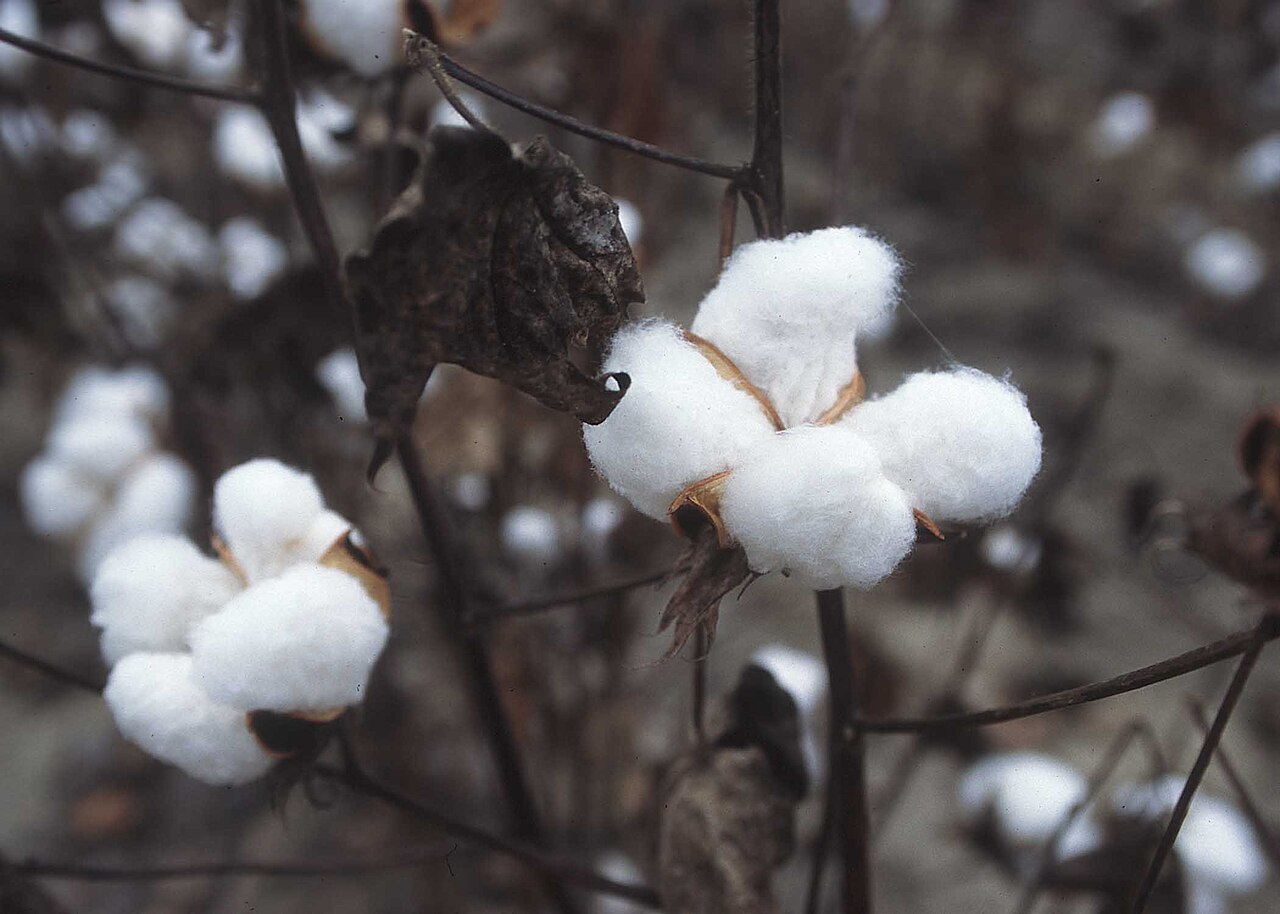
Cotton
Cotton is the most widely used natural fiber in the global textile industry. Grown around the seeds of the cotton plant (Gossypium), it is prized for comfort, breathability and versatility in apparel.
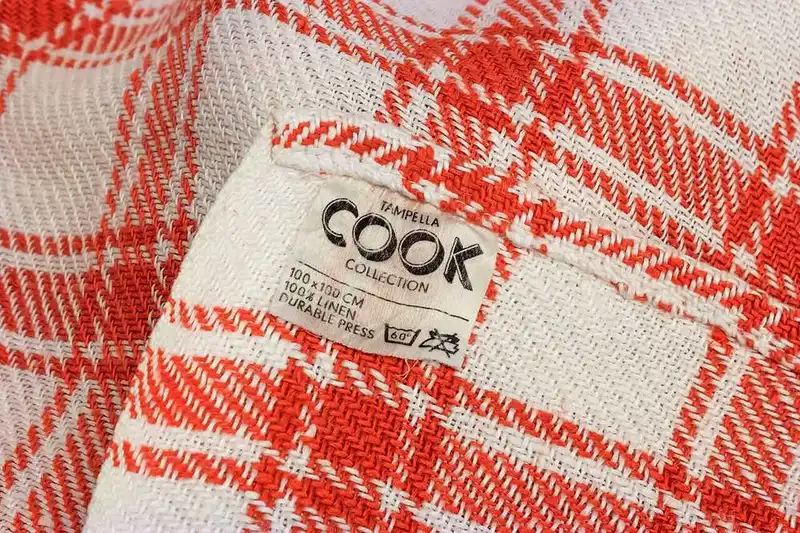
Linen
Linen is a natural fiber extracted from the stem of the Linum usitatissimum plant, one of the oldest used by humankind. Cool, strong and stronger when wet, it is traditional in summer garments for its high breathability, and its tendency to wrinkle has become the aesthetic signature of the natural fiber.
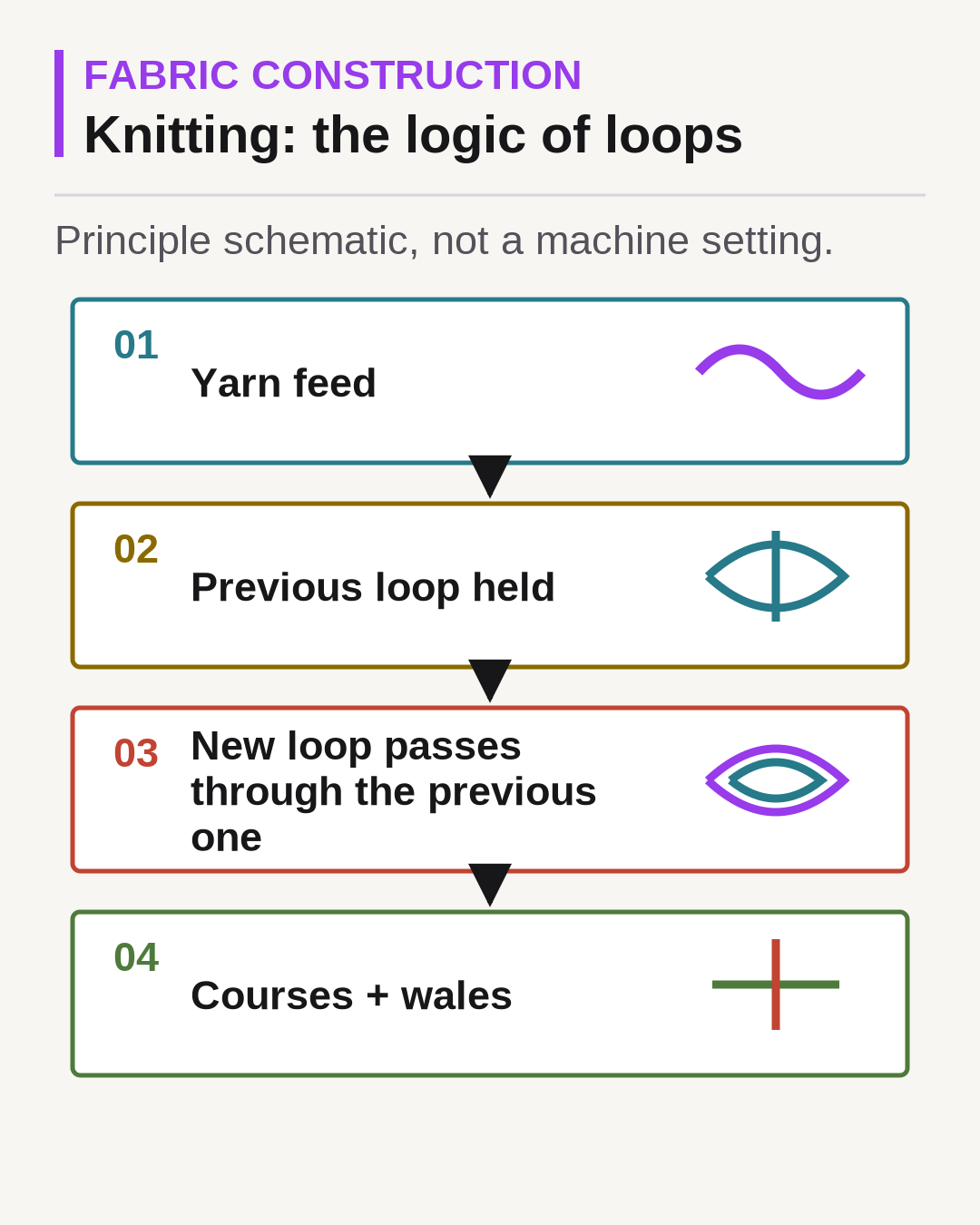
Industrial knitting
Knitting is the process of forming fabric through series of intermeshed loops. It divides into weft knitting, in which yarn travels across the width and needles form loops in sequence, and warp knitting, in which parallel yarns feed needles that work simultaneously along the fabric length.
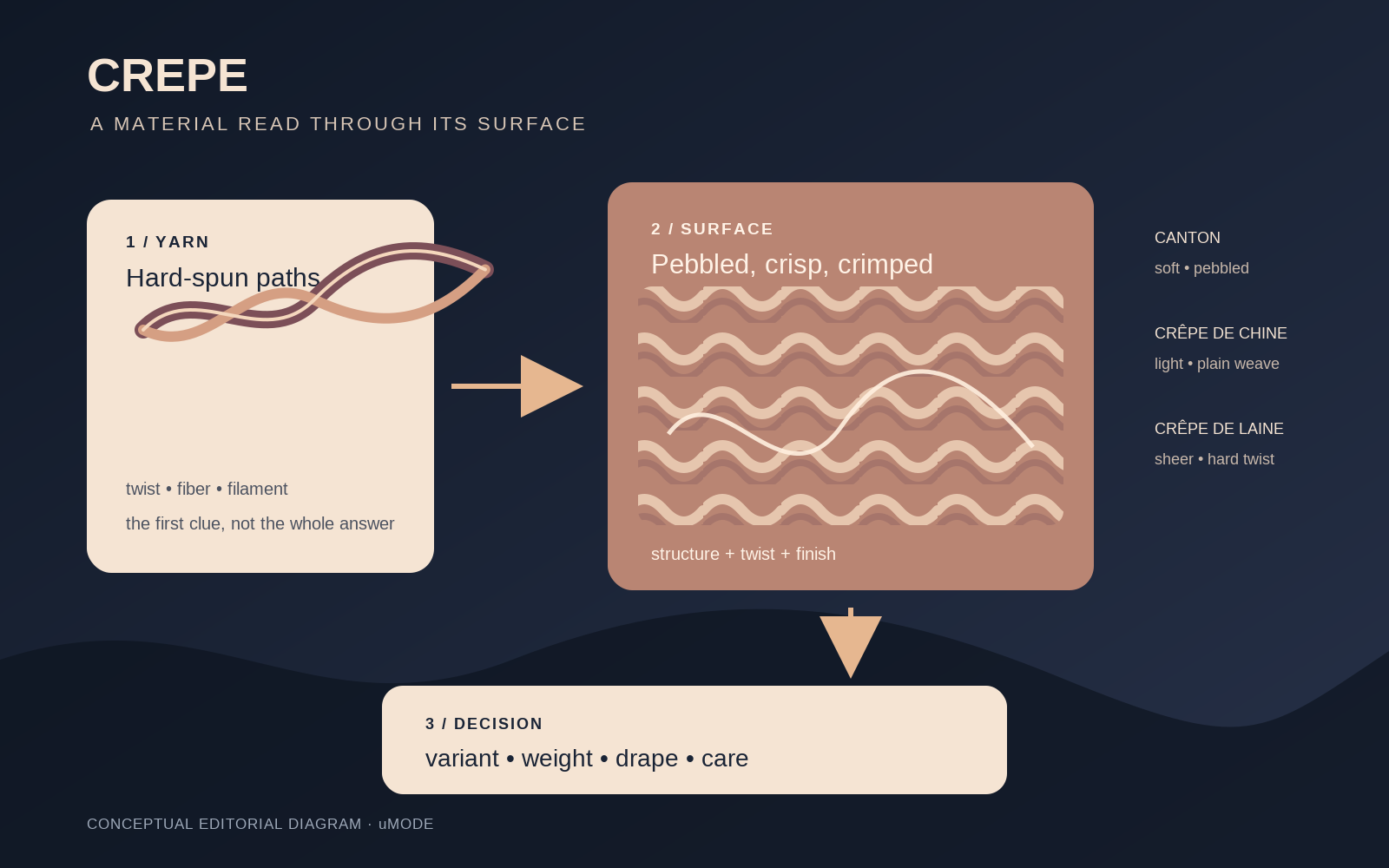
Crepe
Crepe is a family of fabrics recognized by a crisp, pebbled or crinkled surface. The effect may come from high-twist yarns, twist combinations, structure, weight or finishing, so “crepe” alone does not identify a fiber, composition or guaranteed performance.
Sources
Want to apply this to your operation?