Draping (moulage): how it works and how it differs from flat pattern making
Draping shapes fabric on the body or a dress form, without diagrams. See the bust markings, the recommended fabric and the path to the paper pattern.
On this page
- What is the difference between draping and flat pattern making?
- How do you prepare the draping dress form: what are the markings for?
- How do you drape until you reach the paper pattern?
- What do you adjust when truing?
- Which fabric should you use for draping?
- How does draping enter garment creation?
- Frequently asked questions
Draping (moulage, in Portuguese) is the fashion technique that shapes fabric on a body or dress form, while flat pattern making starts from diagrams. You see drape and volume directly on the dress form before the garment is made, but you still need to remove it, true it and transfer the shape to paper.
Draping builds the design in contact with the body or the dress form (UDESC Draping Handbook, p. 2).
What is the difference between draping and flat pattern making?
Draping works the fabric on the body; flat pattern making builds the shape from diagrams.
In flat pattern making, the drafts follow anthropometric proportion rules. In draping, you wrap the body with the material and use its natural drape to build the shape. In industrial use, the three-dimensional pattern is moved to the flat and then goes on to size grading (2013 UEM article, p. 3).
Flat pattern making is the other way of building the pattern; to see pattern making as a whole, see apparel pattern making.
How do you prepare the draping dress form: what are the markings for?
The markings give the references for positioning the fabric and leveling the piece.
On the dress form, you mark the waist, hip, bust, neck, armhole, shoulder, center front, center back and side line. The vertical tapes are red and the horizontal ones are blue. The center front and center back guide the horizontals, whose accuracy affects the result and the leveling of the pieces (UDESC Draping Handbook, p. 25).
How do you drape until you reach the paper pattern?
The sequence goes from the dress form lines to the paper, passing through the fabric, the shape and the truing.
You prepare the dress form lines and mark warp and weft on the fabric. Then you shape and pin, remove the material and true it. After that, you return it to the dress form and transfer the shape to paper, with seam allowance, notches and identification (UDESC Draping Handbook, p. 17).
For the person who does this work, see the pattern maker profession. For product and prototype, see fashion prototyping.
What do you adjust when truing?
When truing, you check the measurements and align straight lines and curves to balance the parts of the pattern.
The check starts from the measurements taken on the dress form. When necessary, you add or reduce measurements and adjust the draft of the parts (UDESC Draping Handbook, p. 21). Taking the fabric off the dress form still leaves adjustment work before the paper.
Which fabric should you use for draping?
You can use fine muslin (raw cotton) or a material with a weight similar to the final product.
Working directly on the final fabric, when it differs a lot from cotton, requires a highly specialized professional (UDESC Three-Dimensional Pattern Making, p. 52). The selection criterion is a weight similar to the final product.
How does draping enter garment creation?
Draping lets you explore shapes, volumes and drape while you shape the fabric.
Development happens in the contact between the material and the dress form. As you work the shape, you also explore ideas for the product (UDESC Three-Dimensional Pattern Making, p. 15).
To organize what comes out of the pattern, see the uMode tools: https://www.umode.com.br/ferramentas (page in Portuguese).
The shape is born on the dress form; the pattern gets its finish on paper.
Frequently asked questions
What is draping (moulage)?
It is pattern making done with fabric directly on the body or dress form, called moulage in Portuguese. It lets you observe drape and volume before the garment is made.
What is the difference between draping and flat pattern making?
Draping wraps the body with the material and uses its natural drape. Flat pattern making is drafted in diagrams with anthropometric proportion rules.
What is the draping dress form for?
The dress form receives red tapes on the vertical lines and blue tapes on the horizontal ones. These markings guide the positioning of the fabric and the leveling of the piece.
Verified facts
- Moulage is the Portuguese term for draping: it builds the design directly on a body or a dress form, letting you observe drape and volume before the garment is made.
Source: udesc.br ↗ - A 2013 article from the State University of Maringá (UEM) distinguishes draping, which wraps the body with the material and uses its natural drape, from flat geometric pattern making, drafted from diagrams with anthropometric proportion rules.
Source: periodicos.uem.br ↗ - The 2013 UEM article describes the industrial use of draping as moving from the three-dimensional pattern to the flat one and then grading the sizes.
Source: periodicos.uem.br ↗ - Preparing the dress form includes marking the waist, hip, bust, neck, armhole, shoulder, center front and center back and the side line; vertical lines use red tape and horizontal lines use blue.
Source: udesc.br ↗ - The center front and center back are references for the horizontal lines, and the accuracy of those lines affects the result and the leveling of the pieces.
Source: udesc.br ↗ - The draping process includes preparing the dress form lines, marking warp and weft on the fabric, shaping and pinning, removing and trimming, returning it to the dress form and transferring it to paper with seam allowance, notches and identification.
Source: udesc.br ↗ - Truing is the check of the measurements taken on the dress form, with additions or reductions when needed and alignment of straight lines and curves to balance the parts of the pattern.
Source: udesc.br ↗ - The fabric for draping can be fine muslin (raw cotton) or a material with a weight similar to the final product; working directly on the final fabric when it differs a lot from cotton requires a highly specialized professional.
Source: udesc.br ↗ - Draping can also take part in product creation, allowing you to explore ideas of shapes, volumes and drape while the fabric is shaped on the dress form.
Source: udesc.br ↗
Related entries
Garment patternmaking
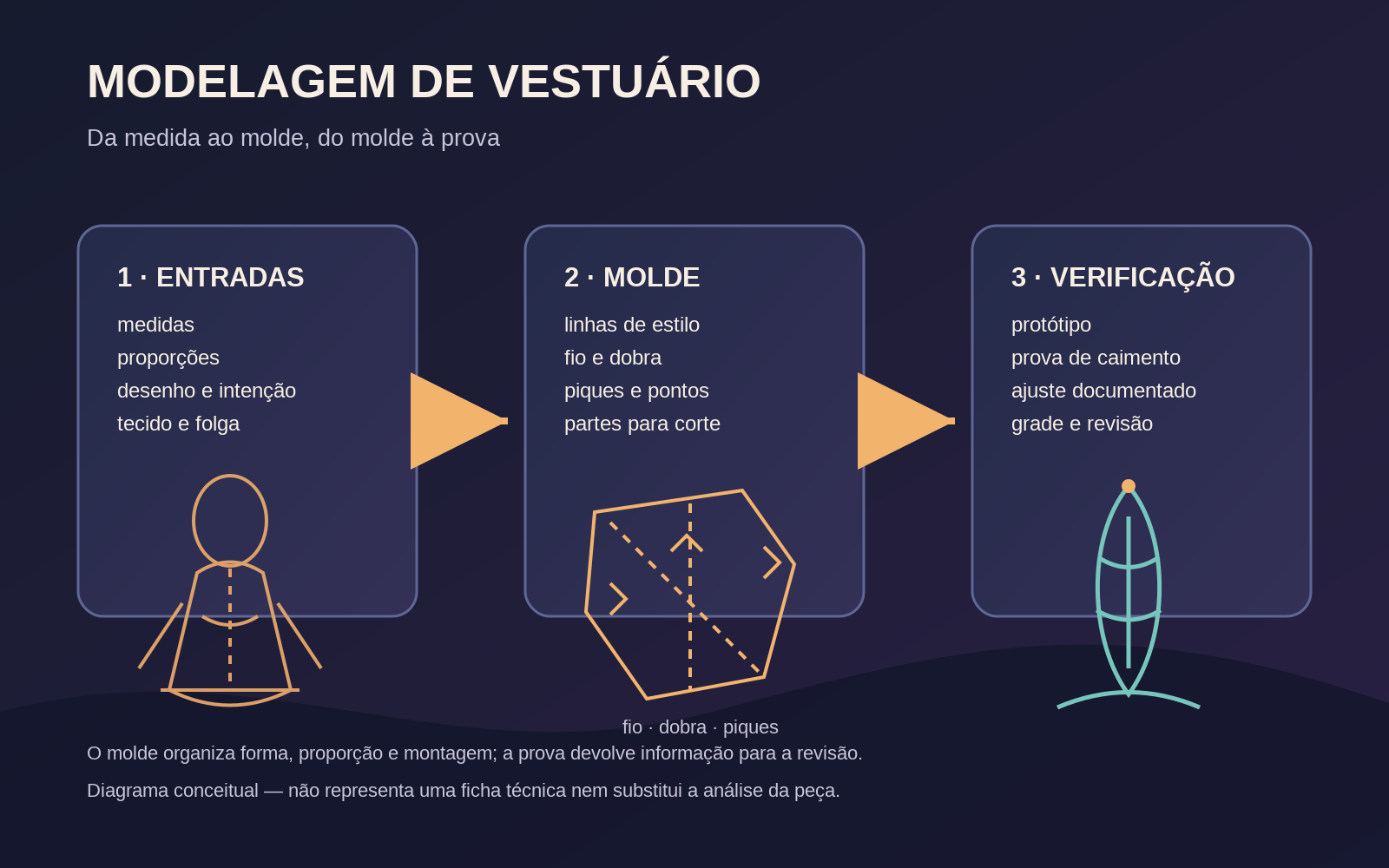
Garment patternmaking is the technique of turning measurements, proportions, and design intent into patterns used to cut and assemble a garment. It connects a block, flat pattern construction or draping with fabric information, production markings, fitting, alterations, and grading; the result is a testable development basis, not an automatic guarantee of fit.
Garment patternmaker
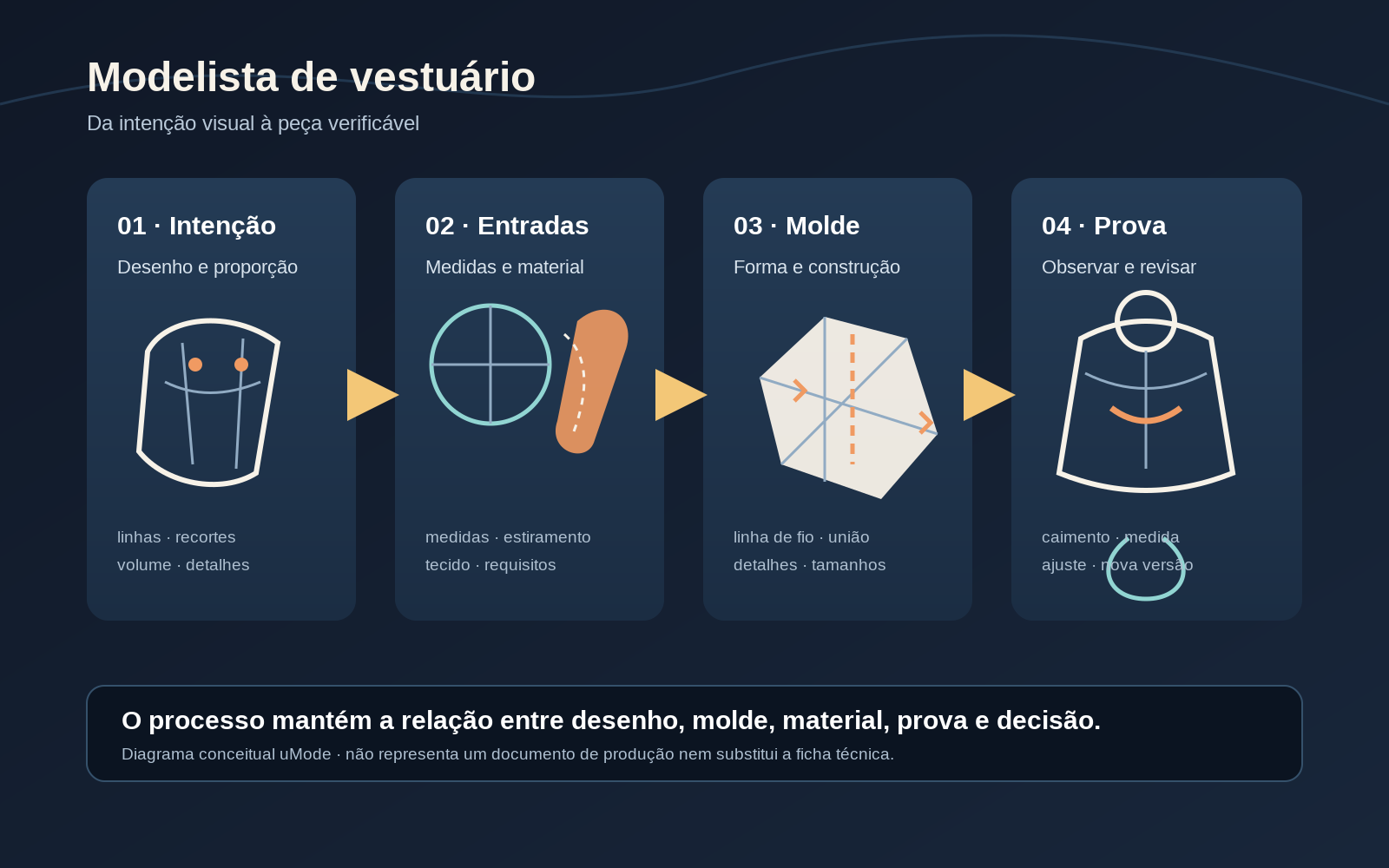
A garment patternmaker turns a garment drawing into patterns, fitting changes, and construction information that can be cut, assembled, and checked. The role combines shape interpretation, measurement logic, material awareness, and pattern revision without replacing design or production authority.
Fashion Product Prototyping
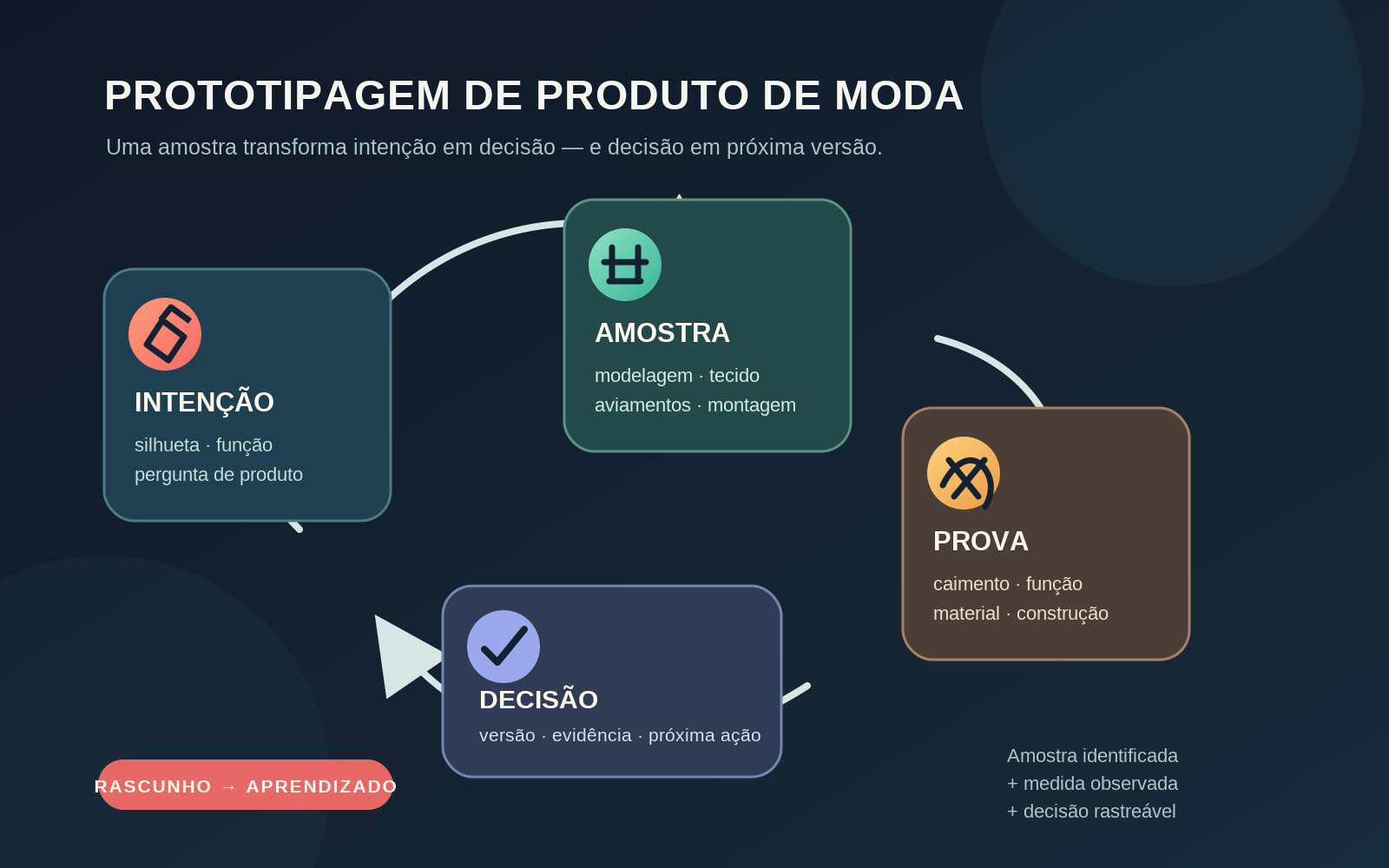
Fashion product prototyping is the process of building and evaluating samples that turn a design intention into a specified, fitted and manufacturable product. It connects design, patternmaking, materials, construction, fit and revision records before a production decision.
Sources
- https://www.udesc.br/arquivos/ceart/id_cpmenu/3787/Apostila_Moulage___2017_15206213254004_3787.pdf
- https://periodicos.uem.br/ojs/index.php/RevTecnol/article/download/24089/13527
- https://www.udesc.br/arquivos/ceart/id_cpmenu/2421/5__Modelagem_Tridimensional_Moulage_de_Vestu_rio_Feminino_Adulto_17145060892119_2421.pdf
Want to apply this to your operation?