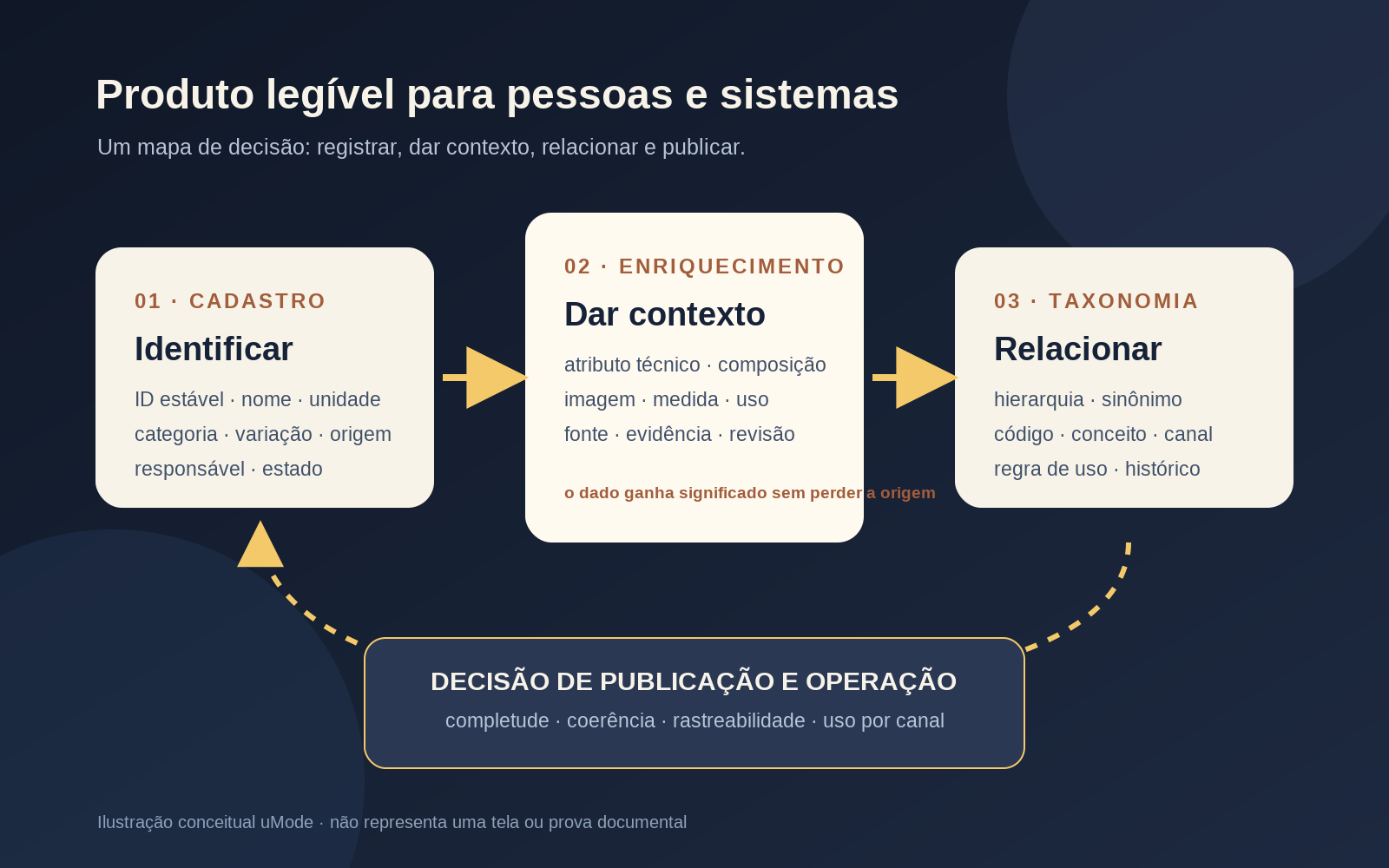
Private label in fashion: what it is and how it works
Private label is the garment manufacturing model in which one company makes clothes that another sells under its own label. See how it differs from sewing subcontracting and an example with a pilot sample.
On this page
- What is the difference between private label and sewing subcontracting?
- How do you record a private label order?
- How do you follow the jeans pilot sample through to approval?
- What should you check in the size run before releasing the order?
- What does the label of a private label garment need to show?
- Do I need my own factory to have private label?
- What other questions still come up?
Private label, the English expression for own brand, is the fashion manufacturing model in which one company makes clothes that another sells under its own label. You order the Aurora women's jeans, a garment invented for this text, and at the pilot sample fitting the waistband measures 70 cm against 72 cm in the chart.
What is the difference between private label and sewing subcontracting?
Private label delivers the finished garment with the contracting brand's label; a facção (sewing subcontractor, also called CMT, cut-make-trim) receives raw material and trims from the client and sells only the labor.
On the Aurora, the first proposal said only "jeans manufacturing", and you only found out what it included when the invoice arrived. Check whether the proposal includes denim and trims or only sewing, before comparing prices (Emídio and Sabioni, Projética, 2010, PDF pp. 3 and 7). This scope is the basis of your supplier management.
How do you record a private label order?
Record product, scope, quantity, size run and the status of each decision.
The Aurora's first record said "design approved", and The Spreadsheet, which only one person understood, turned green without a single piece being fitted. The right record is the basting of the jeans: it holds the decisions while the adjustment is not closed. At the supplier studied, it was the supplier that prepared the spec sheet; the order record is yours and keeps which version you checked (Emídio and Sabioni, Projética, 2010, PDF p. 5).
| Field | Value |
|---|---|
| Product | Aurora women's jeans, blue denim, your brand's label |
| Purchase of denim and trims | Supplier (private label) |
| Spec sheet | Prepared by the supplier; version checked by you |
| Order and size run | 120 pieces: 36 with 30, 38 with 60, 40 with 30 |
| Washed size 38 pilot | Waistband of 70 cm against 72 cm in the chart; second pilot requested, new fitting pending |
| Grading 36 and 40 | To be checked after the second pilot |
| Sealed reference sample | Pending until the new pilot is approved |
| Commercial terms | Price, delivery and cost of the second pilot to be agreed |
How do you follow the jeans pilot sample through to approval?
Note the pilot fitting, the adjustment requested and the result of the second pilot.
In the case studied by Emídio and Sabioni, pattern making worked, most of the time, with a chart or base sent by the client, the pilot sample measurements were checked after washing and the garment received finishing and trims before going to the contractor (Emídio and Sabioni, Projética, 2010, PDF p. 6).
- Identify the version of the spec sheet and the Aurora measurement chart.
- Compare the washed size 38 pilot with the chart and note the waistband divergence.
- Request the second pilot with the waistband adjustment noted.
- Keep the cell yellow until the new fitting arrives.
The Spreadsheet gained, next to the Ok column, another one called Almost.
What should you check in the size run before releasing the order?
In the size run, the fitting of the 38 does not approve the 36 or the 40.
Seal and label the approved sample as the physical reference for production. Grading, measurements and tolerances are evidence of the sample project in the British assessment standard, which also asks for a review history and proper labeling (Skills England, plan ST0540/AP01, 2018, PDF pp. 5, 14 and 17).
What does the label of a private label garment need to show?
Which CNPJ (the Brazilian company tax ID) is sewn into the Aurora jeans, the supplier's or your brand's? The rule accepts both, and the label also shows origin, composition, care instructions and size.
The list includes the national manufacturer, the importer, whoever affixes their exclusive brand or company name or whoever holds a brand license. The information has to be truthful, and the medium indelible and permanent. Retail, physical or online, maintains the integrity of the product and the information (Inmetro Ordinance 118/2021, art. 5, PDF p. 1, and Annex, items 3, 17 and 18, PDF pp. 3 and 5). This is the Brazilian rule; for other markets, check the local labeling law.
Do I need my own factory to have private label?
No: in private label, the contracting company keeps the brand and the sale, and the manufacturing is contracted out.
There are companies that design and/or market branded products without manufacturing them, with production separated from design and marketing, as in the apparel chain (UNIDO, The Global Apparel Value Chain, 2003, PDF p. 13). The design can be yours or the supplier's.
What other questions still come up?
Are private label and own brand the same thing?
Yes, private label for clothing is an own brand: in a UDESC paper, they are products manufactured by one company and sold under another company's brand (Magro, UDESC, PDF p. 13).
Does private label in women's fashion include design?
It can: at the supplier studied, some clients delivered defined drawings and inputs, and most preferred that the supplier develop the products (Emídio and Sabioni, Projética, 2010, PDF p. 5). Write in the contract who creates.
How do you order private label jeans in small quantities?
Ask the supplier how it charges for the small lot, the change of design and the second pilot before closing the quantity.
A pilot approved by word of mouth becomes a whole lot with a 70 cm waistband.
Verified facts
- Juliane Salete Magro defines private label as an English expression for own brand, used for products manufactured by one company and sold under another company's brand.
Source: udesc.br ↗ - Emídio and Sabioni, in a 2010 Projética article, distinguish private label, which delivers the finished garment with the contracting brand's label, from the facção (sewing subcontracting), in which the client supplies raw material and trims and hires labor.
Source: ojs.uel.br ↗ - In the case studied by Emídio and Sabioni in Projética in 2010, the supplier prepared the spec sheet; some clients delivered defined drawings and inputs, while most preferred that the supplier develop the products.
Source: ojs.uel.br ↗ - In the case studied by Emídio and Sabioni in Projética in 2010, pattern making worked, most of the time, with a measurement chart or base sent by the client; the measurements of the pilot sample were checked after washing, and the garment received finishing and trims before going to the contractor.
Source: ojs.uel.br ↗ - Emídio and Sabioni, in Projética 2010, describe the second pilot (repilotagem or repiloto) as a second piece made from the changes proposed by the contractor.
Source: ojs.uel.br ↗ - Production Process Management, from Sebrae/RS, 2007, defines the pilot sample as the first piece produced of a design, used for approval, testing, demonstration to production and visual reference for other copies.
Source: bis.sebrae.com.br ↗ - The assessment plan ST0540/AP01, from Skills England, 2018, includes grading among the knowledge of the product technician and grading rules, measurements and tolerances among the evidence of the sample project.
Source: skillsengland.education.gov.uk ↗ - The assessment plan ST0540/AP01, from Skills England, 2018, asks for approved samples, seals assigned when applicable, the full review history and proper sealing and labeling of the samples.
Source: skillsengland.education.gov.uk ↗ - Inmetro Ordinance 118/2021 allows the label to identify the national manufacturer, the importer, whoever affixes their exclusive brand or company name or whoever holds a brand license, as the case may be, with tax identification; it also requires origin, composition, care instructions and size or dimension.
Source: sindilojas-sp.org.br ↗ - Inmetro Ordinance 118/2021 determines that the other links in the chain, including physical or online retail, maintain the integrity of the product and of its mandatory information, accumulating responsibilities when they perform more than one function.
Source: sindilojas-sp.org.br ↗ - Inmetro Ordinance 118/2021 requires truthful mandatory information and means of identification that are indelible and permanently attached.
Source: sindilojas-sp.org.br ↗ - The 2003 UNIDO report describes companies that design and/or market branded products without manufacturing them, separating physical production from design and marketing.
Source: downloads.unido.org ↗
Related entries
Sourcing and supplier management
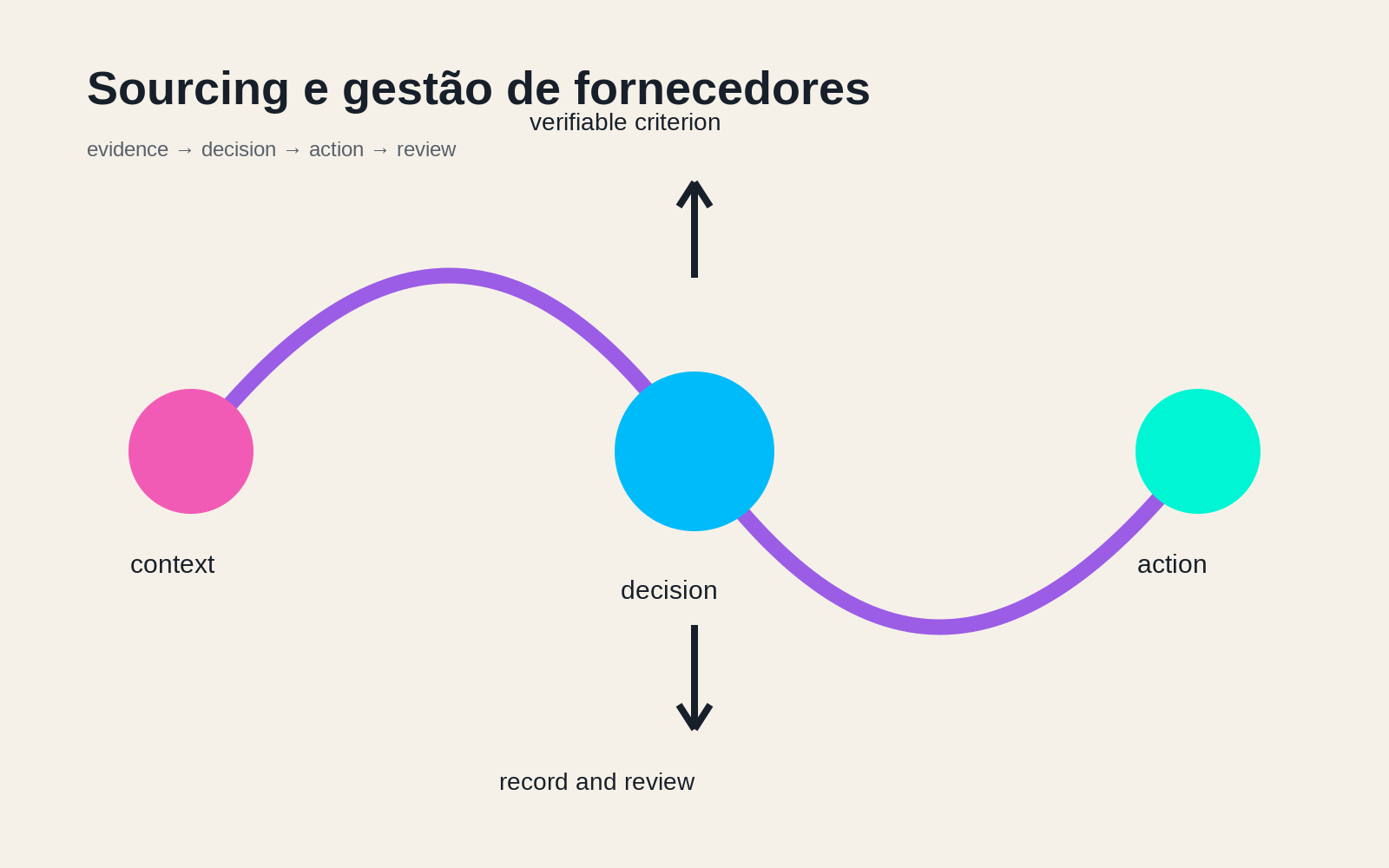
Sourcing and supplier management. Fashion sourcing requires visibility into units and processes, prioritization of human risks, worker dialogue, remediation and a decision trail tied to orders and lots.
Textile and apparel supply chain
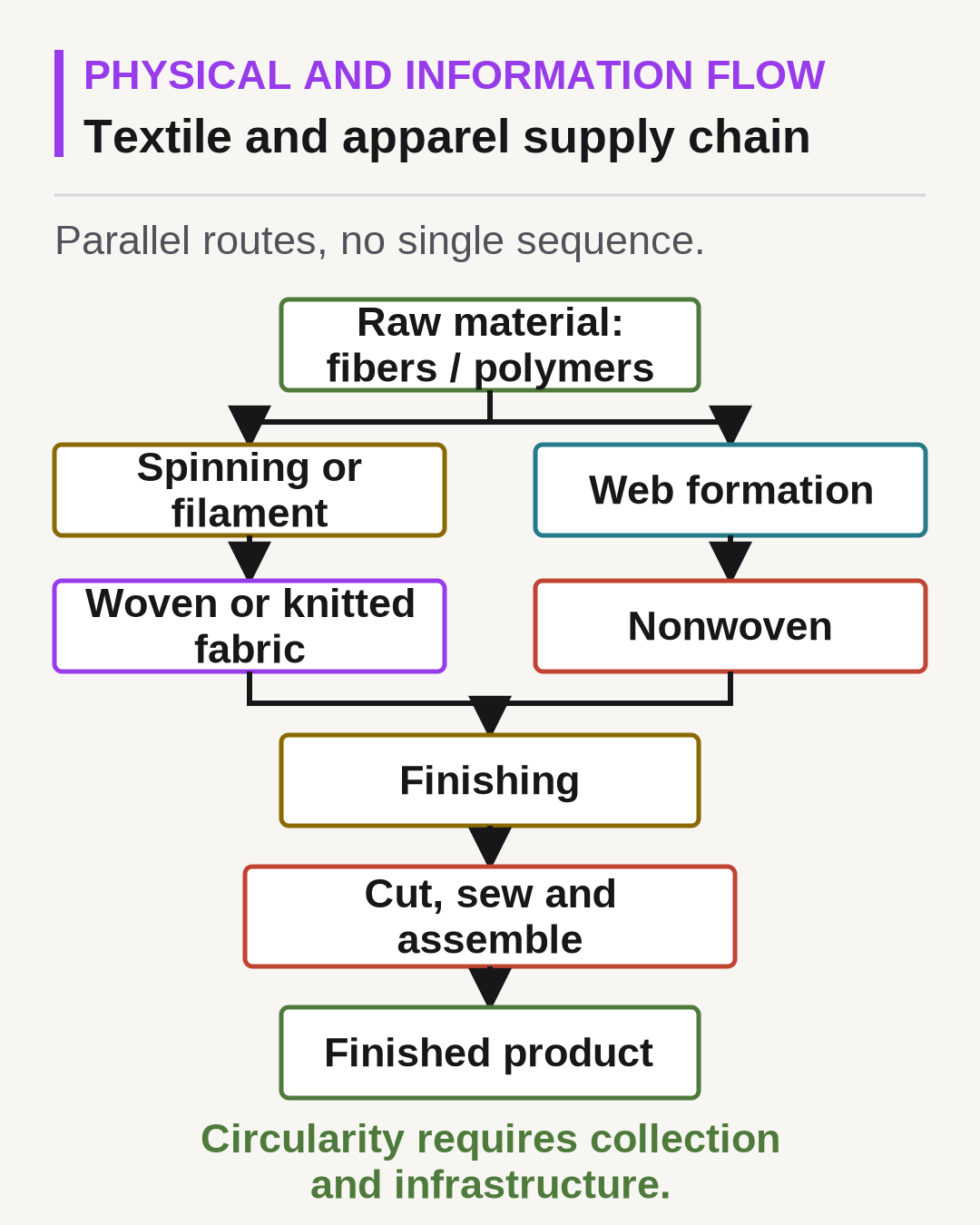
The textile and apparel supply chain transforms natural or manufactured raw materials into yarns, woven or knitted fabrics, and then finished articles. Its reference flow covers fibres, spinning, material formation, wet processing, cutting and assembly, while the real system also includes suppliers, subcontracting, distribution, use and recovery routes.
Sources
- https://www.udesc.br/arquivos/ceart/id_cpmenu/9601/BRANDING_DE_MARCAS_DE_MODA_INFANTIL_DESIGN_EMOCIONAL_COMO_ESTRAT_GIA_DE_FIDELIZA__O_JULIANE_SALETE_MAGRO_17583007224743_9601.pdf
- https://ojs.uel.br/revistas/uel/index.php/projetica/article/download/7724/6867
- https://bis.sebrae.com.br/bis/download.zhtml?t=D&uid=4D917E1B8D6C668F8325745700482839
- https://skillsengland.education.gov.uk/media/2305/st0540_fashion-textiles-product-technologist-epa_for_publication_2-october-2018.pdf
- https://sindilojas-sp.org.br/wp-content/uploads/2021/12/PORTARIA-INMETRO-No-118-DE-11-DE-Marco-DE-2021-PORTARIA-INMETRO-No-118-DE-11-DE-Marco-DE-2021-DOU-Imprensa-Nacional.pdf
- https://downloads.unido.org/ot/48/51/4851584/TYPE_Global_apparel_value_chain.pdf
Want to apply this to your operation?