Fashion product data for AI shopping assistants: how to structure it
AI shopping assistants recommend what they can read, so structured product data decides discovery. Build one consistent record per fashion product, with condition, seller details and photos.
On this page
- What changed in how shoppers discover fashion products?
- Which product attributes do AI shopping assistants compare?
- What does a product record look like?
- How should you structure fashion product data for AI search?
- What role do photos play in product discovery?
- What are the most common questions about AI product discovery?
- How does this connect to the collection workflow?
Fashion product data is the set of structured attributes that AI shopping assistants read to compare and recommend items in fashion.
AI shopping assistants recommend what they can read, so the structure of your product data decides whether your item reaches the shopper. Think of the piece nobody finds because the tag says one thing and the listing says another.
What changed in how shoppers discover fashion products?
Shoppers can now ask a conversational assistant to search and compare resale inventory for them.
Vestiaire Collective launched an app plugin inside ChatGPT that lets shoppers search its pre-owned luxury inventory through conversational prompts. It is also working to make its listings available to OpenAI's broader agentic shopping systems. The RealReal is restructuring data on its 1.5 million listed items so external AI agents can find and recommend them more easily (Vogue Business).
The shift that matters to you is the comparison: an agent can compare a product across several platforms and assess condition, authentication details and seller reliability before it recommends an option. Every fact on this page comes from reporting on resale platforms, so read it as a picture of resale, not of every fashion product.
The shopper still browses, but an assistant now reads the shelf first.
Which product attributes do AI shopping assistants compare?
Agents compare condition, authentication details and seller reliability, while Depop's own platform search, which is not an AI assistant, weighs brand, category, size and color.
Keep the two apart. Depop's search prioritises how closely a listing matches a query, including brand, category, size and color, plus popularity signals, seller history and location (Vogue Business, How to be seen).
The assistant is a different layer. The Vestiaire Collective integration lets shoppers compare up to three listings and ask the agent to explain differences in price, condition and seller information, which makes the assistant another gatekeeper on which options make the shortlist. Our conclusion for you is practical: give each of those attributes its own field.
Price, condition and seller information are the three differences the agent is asked to explain.
What does a product record look like?
A product record holds one set of fields per item, filled the same way every time.
This list gathers the attributes named in the reporting. Treat it as a working checklist:
- Brand
- Category
- Size
- Color
- Condition
- Price
- Seller information
- Authentication details
- Photos
Nine fields, one item.
How should you structure fashion product data for AI search?
Keep one record per product, fill the same attributes every time, and run them through your fashion PIM process.
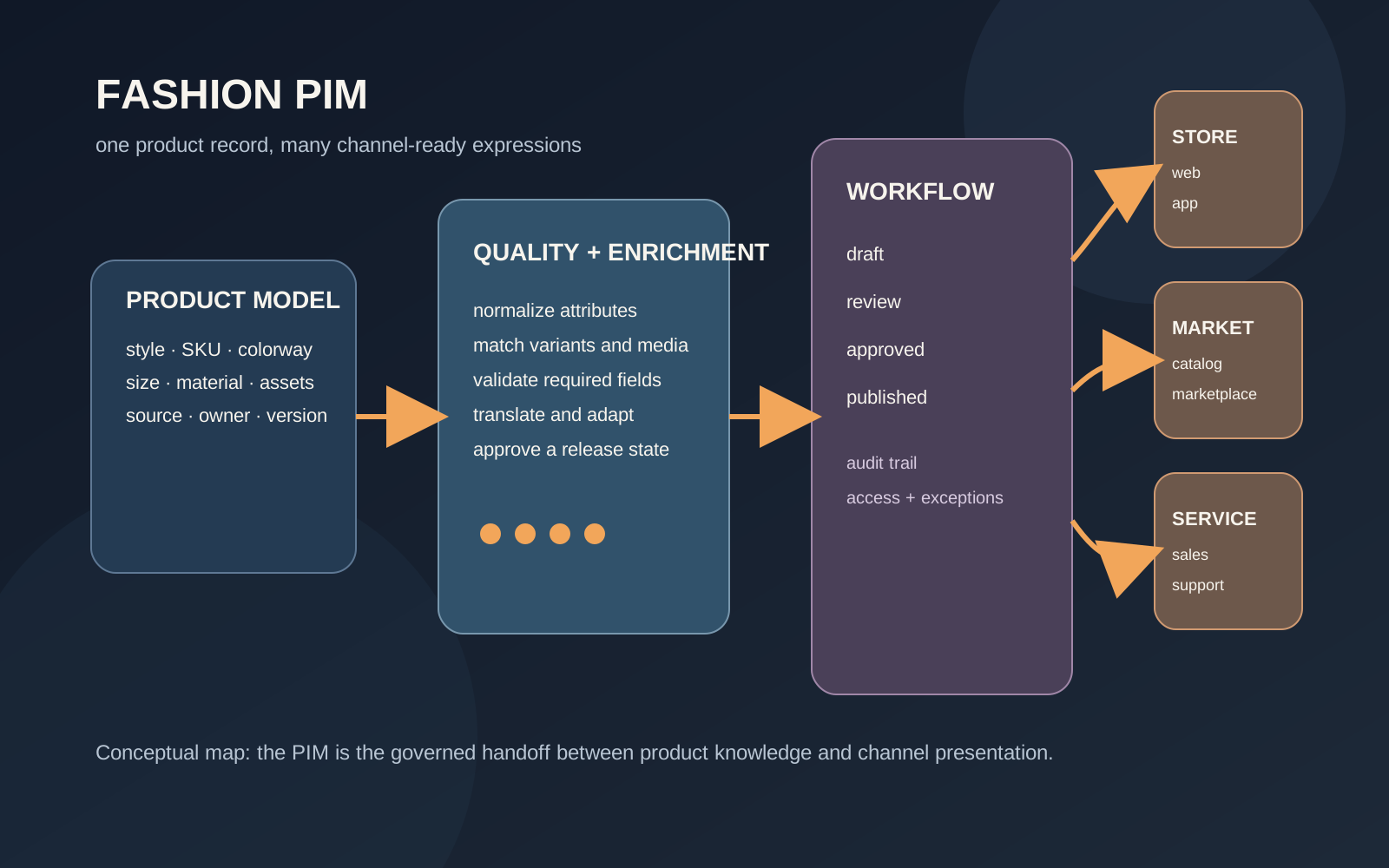
Fashion PIM organizes, enriches, validates and distributes product data to the channels that present a collection (Fashionpedia, Fashion PIM). Handle the attributes as one record, so the same item reads the same way on every channel.
Use the attribute list to drive your product data quality review, checking item, condition and seller fields separately.
One item, one record, the same words on every channel.
What role do photos play in product discovery?
Photos can supply attributes that AI listing tools turn into searchable product information.
Poshmark's Smart List AI generates searchable titles, descriptions and categories from uploaded photos. Depop uses AI to identify listings by category, color and style, so products are found even without the exact keywords. Separately, a randomized A/B test by Vestiaire Collective and Photoroom found that listings with standardised main photos had a 5% higher sell-through rate than with the previous in-house tool (Vogue Business, November 10, 2026). That test measured sell-through, not discovery by an assistant.
A photo can name what the shopper never typed.
What are the most common questions about AI product discovery?
What product data do AI shopping assistants use?
Agents assess condition, authentication details and seller reliability, and Vestiaire Collective's integration explains differences in price, condition and seller information. Depop's platform search weighs brand, category, size and color.
How do I structure fashion product data for AI search?
Keep one record per item with brand, category, size, color, condition, price, seller information and authentication details. Run it through a PIM process that validates it before it reaches each channel.
Why does product data quality matter for AI discovery?
Agents assess condition, authentication details and seller reliability, and Vestiaire Collective's integration compares up to three listings. The RealReal is restructuring data on its 1.5 million items so external agents can find them.
How does this connect to the collection workflow?
PLM Vivo follows the collection through every stage, from the first assortment spreadsheet to sell-out in store.
According to the public uMode tools page, it reads and writes to company systems through API and MCP, an open standard that connects AI to company systems within the permissions of the person asking (uMode, PLM Vivo section and FAQ).
From the first assortment spreadsheet to sell-out in store, always within the permissions of whoever asks.
Verified facts
- Vestiaire Collective launched a dedicated app plugin inside ChatGPT that lets shoppers search its pre-owned luxury inventory and compare products with conversational prompts, and is working to make its listings available to OpenAI's broader agentic shopping systems.
Source: vogue.com ↗ - The RealReal is restructuring data on its 1.5 million listed items to make them easier for external AI agents to find and recommend.
Source: vogue.com ↗ - AI agents can compare a product across several platforms, assessing condition, authentication details and seller reliability before recommending an option.
Source: vogue.com ↗ - Poshmark's Smart List AI generates searchable titles, descriptions and product categories from uploaded photos; Depop uses AI to identify listings by category, color and style, so products are found even without the exact keywords.
Source: vogue.com ↗ - Depop's search prioritises how closely a listing matches a query, including brand, category, size and color, plus popularity signals, seller history and location.
Source: vogue.com ↗ - Vestiaire Collective's ChatGPT integration lets shoppers compare up to three listings and ask the agent to explain differences in price, condition and seller information, which makes the AI assistant another gatekeeper on which options make the shortlist.
Source: vogue.com ↗ - In a randomized A/B test by Vestiaire Collective and Photoroom, listings with standardised main photos had a 5% higher sell-through rate than with the previous in-house tool.
Source: vogue.com ↗ - Fashion PIM is the process of organizing, enriching, validating and distributing product data to the channels that present a collection.
Source: umode.com.br ↗ - PLM Vivo follows the collection through every stage, from the first assortment spreadsheet to sell-out in store, and reads and writes to company systems through API and MCP, an open standard that connects AI to company systems within the permissions of the person asking.
Source: umode.com.br ↗
Related entries
Fashion PIM
Fashion PIM is the process of organizing, enriching, validating and distributing product data to the channels that present a collection. It combines a data model, quality rules, ownership and integrations; it is not merely a catalog and does not automatically replace PLM, ERP or DAM.
Artificial intelligence applied to fashion
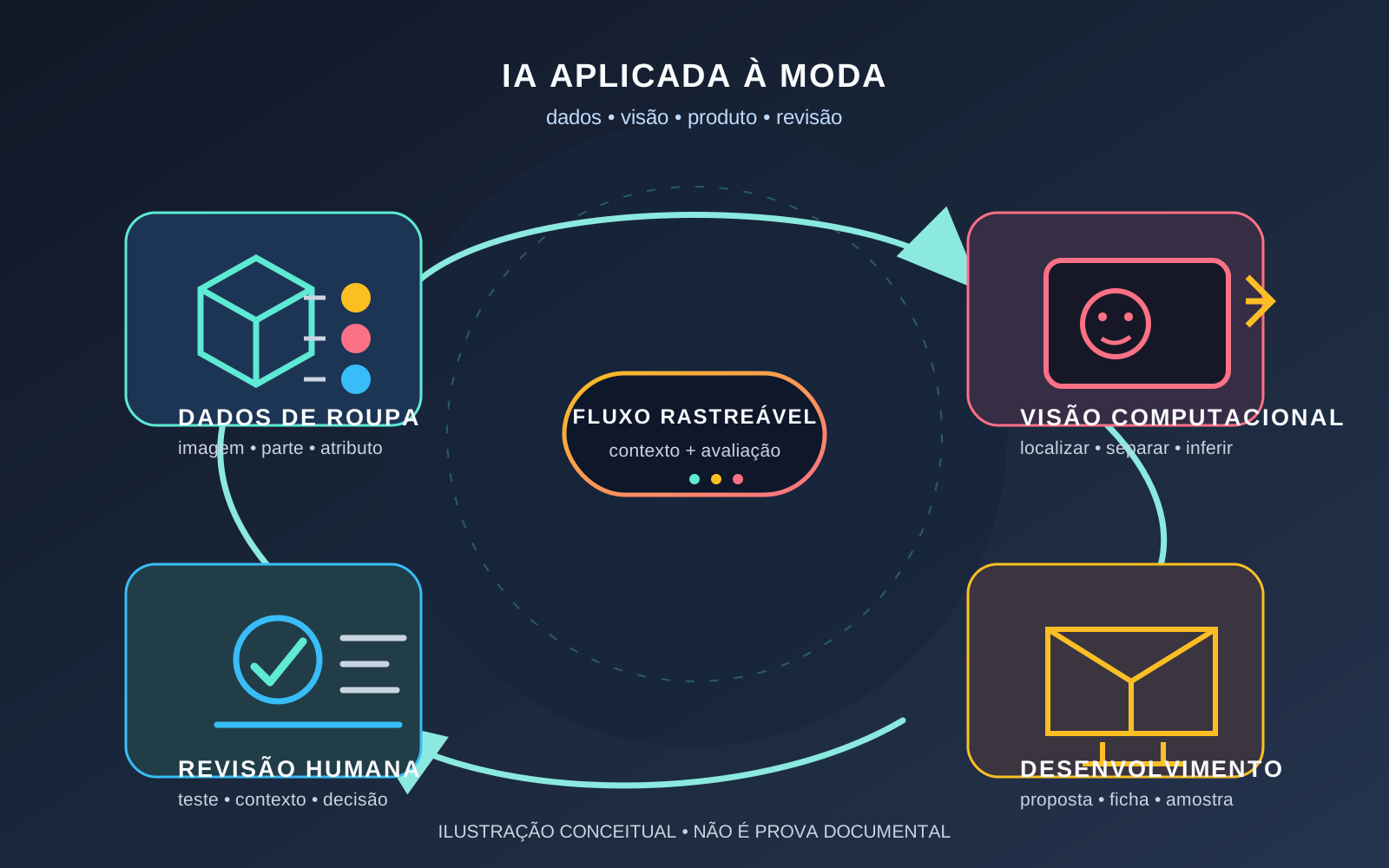
Artificial intelligence applied to fashion uses models to interpret images, attributes, and product decisions across development and operations. The process is more dependable when the fashion object, use context, evaluation criteria, and human review are made explicit.
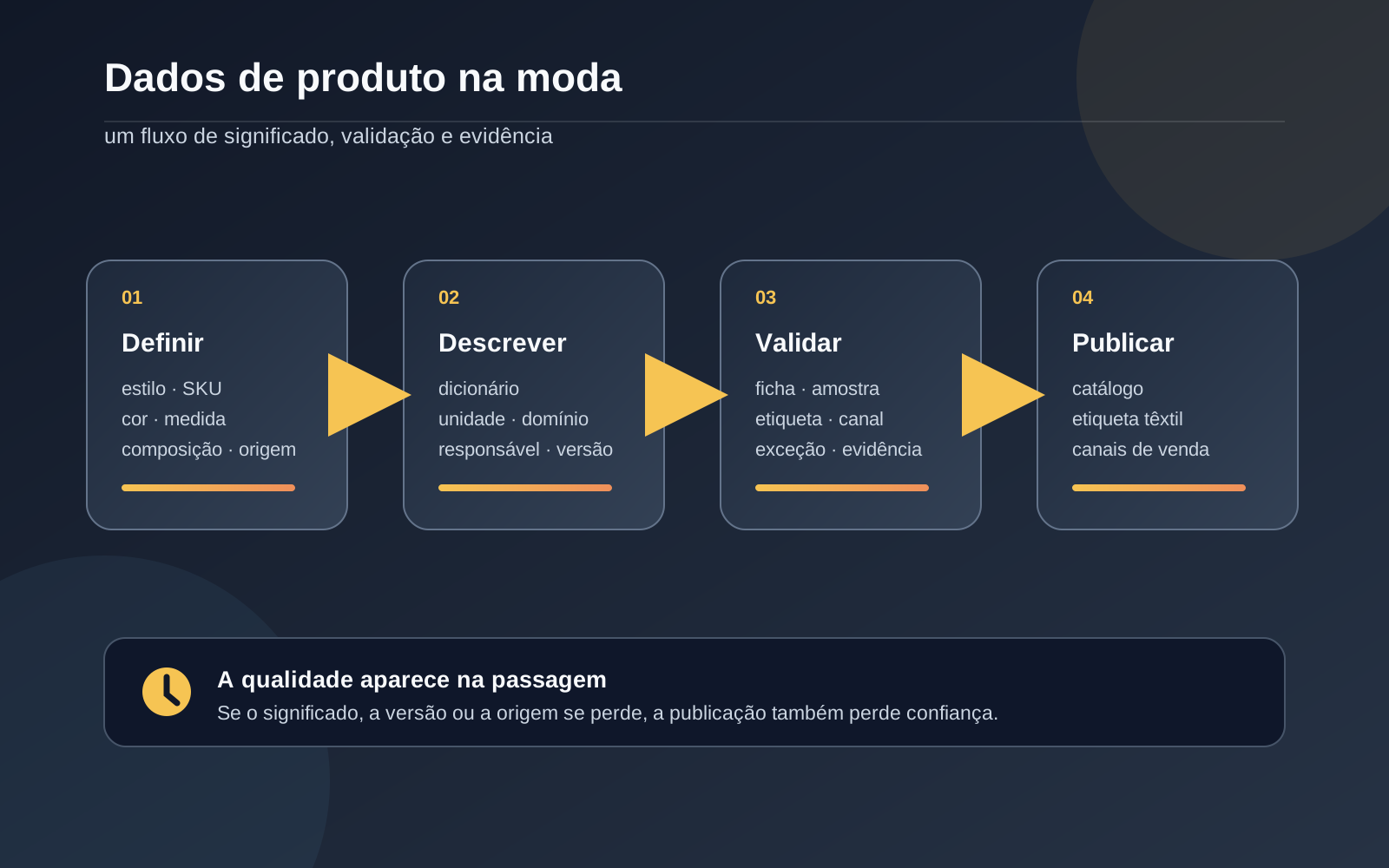
How to improve product data quality
How to improve product data quality. Improving product data quality in fashion means separating style, variant, technical attribute and regulatory record; defining every field; validating source and format; and controlling the handoff from tech pack to catalog, label and sales channel. The process becomes dependable when each exception has an owner, evidence and a version.
Sources
Want to apply this to your operation?