What is RFV (RFM) analysis in fashion? Learn how to use it to sell more and better
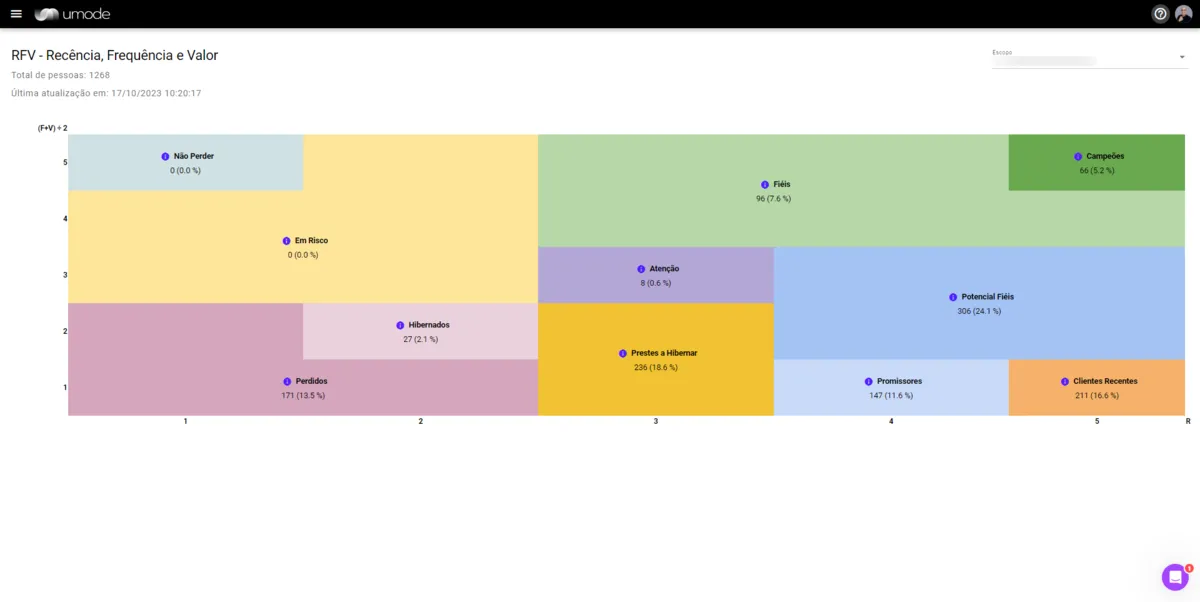
RFV, known in English as RFM, stands for Recency, Frequency and Monetary Value (in Portuguese, Recência, Frequência e Valor Monetário, hence the acronym RFV). This methodology is a data analysis tool widely used by fashion businesses that want to manage their customer base more effectively.
But how does RFV analysis work in fashion, and why is this methodology so important for increasing your sales?

How RFV works in practice
Recency refers to the date of the customer's last purchase, Frequency is the number of purchases made in a period of time, and Monetary Value is the amount each customer spent on each purchase.
To apply the RFV methodology, you first need to collect data on fashion customers' purchase patterns over recent months and then run the analysis. With this basic information, it is possible to classify customers into different categories.
Those who bought recently, often, and spent more money are considered the most valuable customers for the business. Those who bought a long time ago, less often, and spent little are considered less valuable.
Based on this classification, you can create personalized marketing strategies for each group of customers. For example, for the "most valuable" customers you can offer launches, exclusive promotions and differentiated service. For the "least valuable" customers, you can offer incentives to come back to your fashion brand.
In addition, RFV analysis can help you observe behavior patterns and identify which customers have the greatest potential to become more valuable and loyal in the future.
For example, if a customer often buys your fashion products and spends a reasonable amount, but has not bought for a while, it may be worth sending a special offer to encourage them to buy again and thus increase their value to the company.
What are the RFV classifications?
RFV analysis scores a customer in each of these three categories, usually on a scale of 1 to 5 (the higher the number, the better the result).
The "best" customer would receive the maximum score in all categories. These three RFV factors can be used to reasonably predict the likelihood of a customer doing business with your company again.
The classifications commonly applied in the RFV matrix
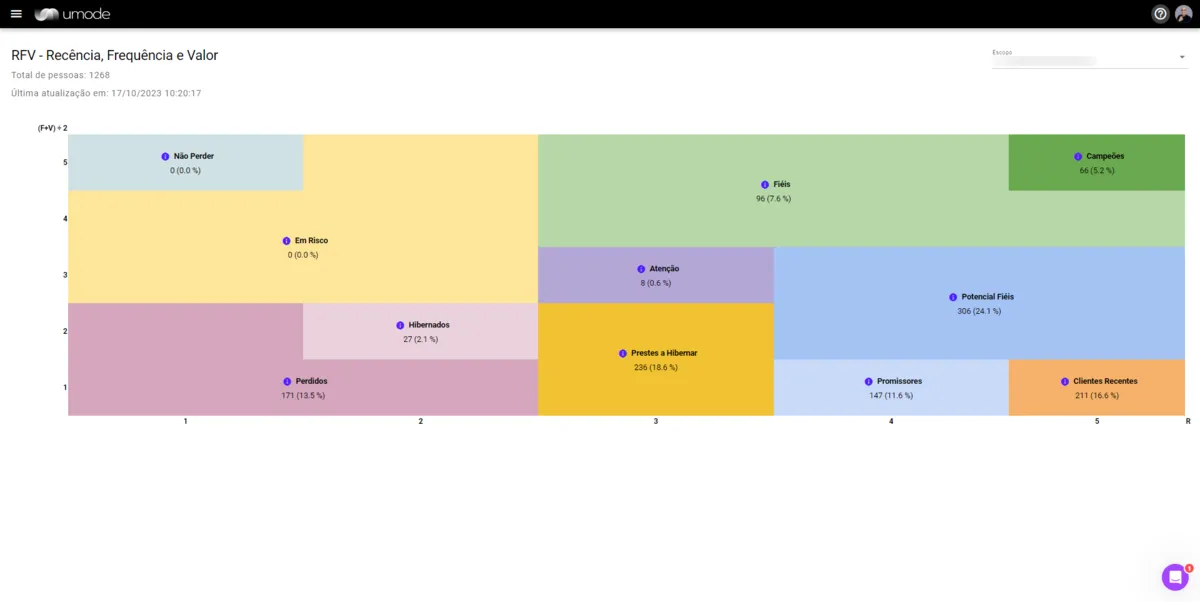
Champions: Bought recently. Buy often. And spend a lot!
Loyal: Spend good money. Often.
Potential loyalists: Recent customers. Spent a good amount. Bought more than once.
Recent customers: Bought recently, but not often.
Promising: Recent buyers, but did not spend much.
Needs attention: Above-average recency, frequency and monetary values. (May not have bought very recently.)
About to sleep: Below average recency, frequency and monetary values. (You will lose them if you do not reactivate them.)
At risk: Spent a lot of money and bought often, but a long time ago. (You need to bring them back!)
Can't lose them: Made big purchases and bought often, but some time ago.
Hibernating: Last purchase was some time ago. Low spending and a low number of orders.
Lost: Lowest recency, frequency and monetary scores.
Why it matters
You have probably heard that IT IS MUCH CHEAPER TO SELL TO PEOPLE WHO ALREADY KNOW YOU than to convert a stranger into a customer.
However, talking to hundreds of contacts one by one is tiring and frustrating. By identifying who your best customers are and how to encourage them to buy more with offers tailored to the moment of purchase, you can create more effective sales strategies and increase the revenue of your fashion business.
Want to apply this to your operation?