The billion-dollar financial impact of rework and collection delays in fashion retail
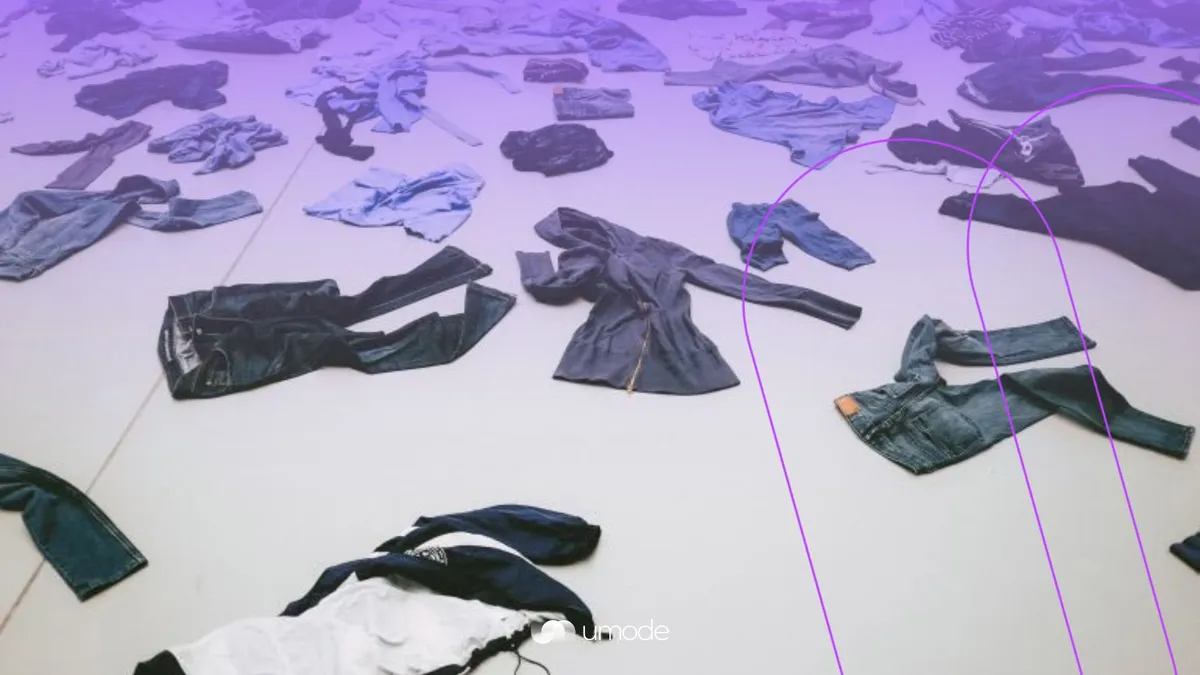
The fashion and retail sector faces one of the biggest silent financial crises in the global industry: the astronomical losses caused by rework and collection delays. While consumers see only the shop windows and shiny advertising campaigns, behind the scenes billions of dollars are wasted every year because of operational inefficiencies, quality problems and supply chain failures.
This crisis is not only a technical problem; it is a systemic issue that affects everyone from large conglomerates to small emerging brands, shaping prices, product quality and even the industry's sustainability. The numbers are alarming: global financial losses related to production delays in the apparel sector exceed US$1 trillion a year, while unsold inventory problems account for between US$70 billion and US$140 billion in lost sales in 2023 alone.
The global scale of financial losses
The cost of production delays is one of the biggest financial drains in the sector. According to recent research, production delays cost more than US$1 trillion in lost revenue every year for the global fashion and apparel industry. This astronomical figure does not represent only lost direct sales but encompasses a cascade of consequences:
- Reduced cash flow during critical sales periods
- The need to hold larger inventories to compensate for uncertainty
- Air freight costs when products arrive late (3 to 5 times more expensive than sea transport)
- Loss of market position when competitors fill the gaps left empty
- Erosion of consumer trust and damage to brand reputation
The problem of dead stock and excess inventory
Excess inventory is another devastating facet of this financial crisis. Data from 2023 show that the value of surplus inventory at leading global fashion brands ranged from US$70 billion to US$140 billion in estimated sales. This problem shows up in several ways:
- Between 2.5 and 5 billion garments were overproduced by fashion brands in 2023
- Luxury brands such as LVMH and Kering recorded surplus inventory of almost 5 billion euros combined in 2023
- Deteriorated inventory represented between 4% and 8% of total sales for these companies
The out-of-stock crisis
Paradoxically, while companies struggle with excess inventory, they also suffer significant losses from lacking products. Out-of-stock items cost retailers up to US$634.1 billion in annual revenue. This seemingly contradictory situation illustrates the complexity of inventory management challenges in fashion:
- Incorrect inventory purchases by size result in an average loss of up to 20% of brands' monthly profit
- Lack of specific sizes was identified as consumers' main complaint
- Companies such as Lululemon attributed slower growth in the US partly to a lack of inventory in smaller women's sizes
The iceberg of quality costs
The Cost of Poor Quality (COPQ) in the textile industry works like an iceberg: only 20% of quality-related costs are visible (rejected products), while 80% stay hidden below the surface, silently eroding profits. These hidden costs include:
- Rework of pieces before final inspection
- Overtime to correct defects
- Additional production time for corrections
- Reduced overall operational efficiency
- Impact on customer satisfaction and brand value
Hard data on the impact of rework
Detailed studies in factories reveal the direct financial impact of quality problems:
- In factories with a 1% rejection rate, this equals US$10,000 in monthly losses for an operation with US$1 million in exports
- Approximately 25% of pieces leave the production line with some type of defect requiring rework
- Factories often run at 125% of their calculated capacity (2 hours of overtime per 8-hour shift) to compensate for rework
- COPQ represents approximately 40% of conversion cost in the apparel industry
Specific rework cases and their costs
A concrete example illustrates the financial scale of rework: imagine a shipment of 419 skirts failed the final audit because of poorly made waist seams. The correction required:
- 18 employees working 2 hours each (36 man-hours in total)
- Additional cost of Rs. 750 (approximately US$9)
- Cost per piece of Rs. 1.79 (US$0.04 per piece)
Although it seems small per unit, when multiplied by the millions of pieces produced globally, the numbers become astronomical.
The vicious cycle of discounts and margin erosion
The epidemic of forced discounts
Excess inventory and production delays force brands to resort to discount strategies that drastically erode profit margins. This situation has created what experts call a "discount addiction" for both brands and consumers:
- Retailers globally lose US$300 billion a year because of inefficient price-marking processes
- Consumers were willing to pay only 76% of full price in women's fashion categories between 2013 and 2016
- Fast fashion brands sell between 40% and 45% of their merchandise at a discount
- In American department stores, up to 76% of clothing is sold at a discount
Business cases of discount losses
Specific examples show the devastating impact of forced discounts:
- H&M accumulated more than US$4 billion in unsold inventory in 2018, forcing significant discounts that resulted in profit reductions for the sixth consecutive quarter
- Gap Inc. faced US$3 billion in unsold products in 2022 due to forecasting errors, resorting to "heavy discounts and promotions" to move products
- Nike said markdowns affected about 44% of its assortment on average in 2024, compared with only 19% in 2022
The impact of price pressure on margins
Constant pressure for discounts resulted in margin contraction of 120 basis points for fashion retailers in 2024, even with revenue growth of 13% a year. This margin compression is caused by:
- Amplified discounts due to slowing demand
- Rising spending on advertising and promotions to drive sales
- Intensified competition from new online players
- Inflationary pressure on operating costs
Specific cases of major brands and their losses
Inditex (Zara): the wounded giant
Inditex, the owner of Zara and a global fast fashion leader, did not escape billion-dollar losses:
- Recorded an impact of 300 million euros in inventory write-downs alone during periods of rework
- Faced margin pressure due to currency costs and a shorter supply chain
- Profits were affected by European climate changes that hurt physical sales
H&M: the Swedish giant's crisis
H&M, the second-largest clothing maker in the world, went through one of the biggest inventory crises in fast fashion history:
- Accumulated US$4 billion in unsold inventory in 2018
- Closed 160 stores as a direct result of the inventory crisis
- Reported a drop in monthly sales for the first time in almost four years
- Imposed additional price cuts after a 7% increase in inventory
Primark: losses during the pandemic
Primark, known for not selling online, was particularly vulnerable during lockdowns:
- Potential losses of 650 million pounds per month during store closures
- Could not offset through online sales because of its physical-store business model
Nike: technology failures and their consequences
Nike experienced one of the best-documented inventory management failures in corporate history:
- Lost US$100 million in sales due to problems with inventory management software in 2001
- Overstock of low-selling shoes and a shortage of the popular Air Jordans
- Kept facing inventory problems in 2016, with gross margins declining due to a higher percentage of discounted sales
The human and operational factor in costs
Impact of lost skills in the supply chain
Supply chain volatility resulted in significant worker displacement and loss of skills, creating new financial challenges:
- Intensified competition for skilled labor in countries such as Vietnam, where automotive and technology industries attract former textile workers
- Understaffed factories face longer production schedules
- The need to pay for express freight, overtime work or additional storage space to compensate for delays
Operational quality costs
The structure of quality-related costs in the textile industry reveals worrying patterns:
- Internal failures make up the largest share of COPQ, including sewing rework, pieces set aside for poor quality and fabric rejections
- External failures include complaints, discounts for packaging failures and lost sales due to insufficient quantities
- Appraisal costs consume significant resources in quality staff salaries
- Prevention costs receive minimal investment, with little effort in R&D, training and improvement initiatives
Macroeconomic and sector impacts
The global retail inventory problem
The problem goes beyond individual companies, becoming a macroeconomic issue:
- In the United States, total retailer inventories rose US$78 billion to about US$740 billion in 2022, growth of approximately 12%
- Higher interest rates and limited storage capacity are raising inventory holding costs
- Suppliers face financial shocks and insolvency risks when retailers cut orders
Impact on share value and market confidence
Operational losses have direct consequences in financial markets:
- Share prices of some mass retailers declined during periods of excess inventory
- Announcements of production delays reduce shareholder value by 12% on average
- They can cost between 15% and 35% of a company's Net Present Value
Emerging solutions and technology investments
Artificial intelligence and inventory optimization
Companies are investing heavily in technology solutions to mitigate losses:
- AI for demand forecasting can reduce inventory losses by up to 6%
- Markdown optimization systems allow strategic, data-based discounts
- Predictive analytics can improve allocation accuracy and reduce assortment stockouts
Digital transformation of the supply chain
Investments in digitization are becoming critical:
- Digital production tracking systems improve supply chain efficiency and collaboration
- Data transparency technologies reduce communication failures between systems
- Integration of packaging, shipping and order management systems prevents delays and inventory reductions
Future outlook and mitigation strategies
Business model shift
The industry is being forced to rethink fundamental models:
- A shift from large orders to a "test and repeat" model with limited runs
- Shorter lead times through geographically closer sourcing
- Investment in sustainability as a competitive differentiator and regulatory requirement
Loss reduction strategies
Successful companies are implementing multifaceted approaches:
- Improving quality within the process through effective quality management systems
- Skills training for operators, supervisors and production heads
- Investment in R&D to prevent defects at the source
- Reducing COPQ by 50% by improving first-pass quality
Conclusion: a sector in forced transformation
The billion-dollar financial losses caused by rework and delays in fashion collections represent more than simple operational inefficiencies; they symbolize an entire sector in an identity crisis. With more than US$1 trillion lost annually to production delays, between US$70 and 140 billion in surplus inventory, and US$300 billion lost to inefficient price-marking processes, the industry faces one of the biggest financial challenges of its history.
The specific cases of giants such as H&M, Zara, Nike and others show that no company, regardless of its size or expertise, is immune to these devastating losses. The difference lies in the ability to adapt and invest in innovative solutions.
The future of the fashion industry will depend on companies' ability to turn these challenges into opportunities through:
- Massive investment in technology and artificial intelligence
- A fundamental restructuring of supply chains
- Implementing preventive rather than reactive quality systems
- A cultural shift toward sustainability and efficiency
Companies that successfully navigate this transformation will not only survive the current crisis but emerge as leaders of a new era in fashion, more efficient, sustainable and financially robust. Those that fail to adapt will keep feeding the billion-dollar loss statistics that define the sector today.
Want to apply this to your operation?