The importance of the textile industry in Brazil
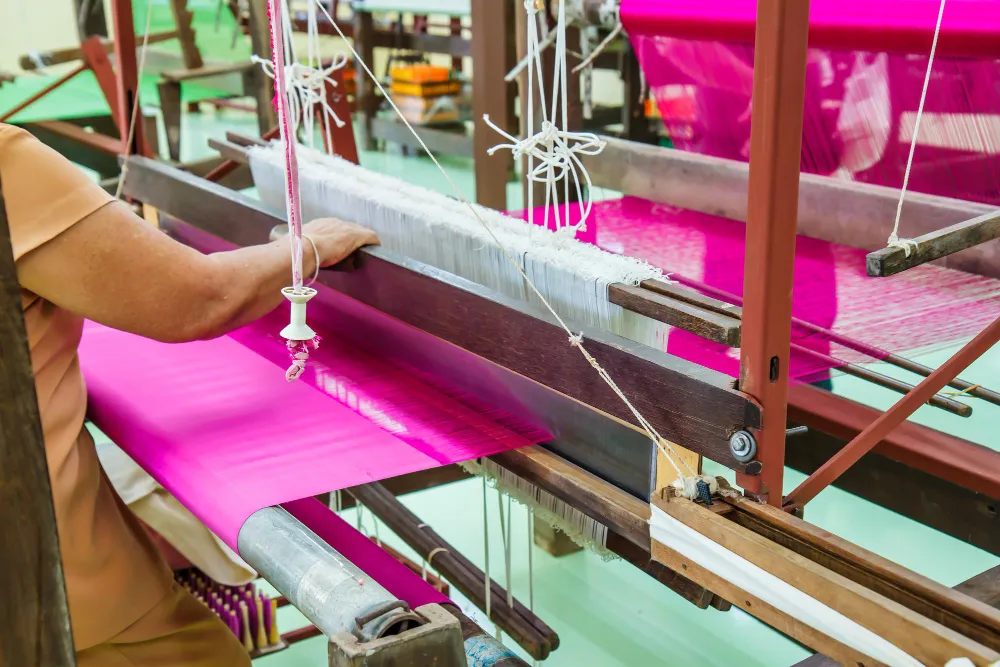
The textile industry is one of the largest industries in operation on the planet and is known for being very diverse. From a historical perspective, it can also be seen as one of the pioneers.
After all, the first known signs of textile manufacturing, using the practice of weaving, date back to about 5000 BC.
It is one of the most important economic categories of any country that brings other industries together within the segment. That is because it can offer both products associated with comfort and products classified as an essential need, like the clothes we wear.
What is the textile industry?
The textile industry is a large manufacturing sector that transforms fibers into yarns, yarns into fabrics and, finally, into products ready for use.
The word textile comes from the Latin textilis, which means "to weave". In the past it referred only to natural fabrics. But as processes changed over time, textiles came to include other materials of synthetic origin.
In practice, these fabrics are dyed, printed or turned into products such as clothing and many other items.
The process uses many types of fibers, such as cotton, which is a natural fiber (there are also artificial and synthetic ones), to make the fabrics.
The industry always tries to meet all the demands of what we call the "Textile Chain", which includes fiber producers, weaving mills and apparel manufacturers.
It is worth remembering that this is one of the industries where the seasons of the year require changes in production. After all, the climate of each period determines different demands, according to market consumption.
The fashion industry also plays a prominent role when it comes to the textile industry. By its nature, it depends completely on what this type of industry does.
Another example of a segment that depends on this activity is the furniture industry, which uses several types of fabrics.
How does the textile industry work in Brazil?
According to 2019 data released by Texbrasil (the Internationalization Program of the Brazilian Textile and Fashion Industry), Brazil has a productive force of 25.5 thousand companies installed across the country.
More interesting facts
- Companies in the segment, of all sizes, already directly employ more than 1.5 million workers. The number grows to 8 million when indirect jobs are included.
- As the country is self-sufficient in cotton production, with no need to import this raw material, Brazil makes about 9.4 billion garments per year.
- Together, the companies in the textile sector generate annual revenue of US$47.1 billion.
Brazil is also the only textile network that can be seen as complete in the Western Hemisphere.
In other words, only Brazil has everything needed to form this network, from fiber production (such as cotton farms), through weaving mills and apparel manufacturing. We also have a strong retail sector to sell the output.
This explains why the country has a significant complex of facilities, ranking fourth among the countries with the most textile industries in the world.
The importance of the textile industry
Brazil can be recognized worldwide for its large soy and corn production, with positive impacts on the agricultural industry. But the industry that represents a huge investment opportunity is, in fact, the textile segment.
Because of its prominence in cotton production as well, the country can generate an interesting variety of yarns, fabrics and other natural materials.
We have a 200-year history since the textile industry began in the country. Today, it can be said that it is an essential sector for creating jobs and income. It directly influences national GDP, and it has an extensive network of companies working around this industry.
Main products made by the textile industry
What does the textile industry produce? Textile factories turn textile raw materials into fabrics and other finished items. Some of the products made in this segment are:
- Different types of fabrics
- Clothing
- Household goods
- Carpets and rugs
- Towels
- Curtains
- Bed sheets
- Ropes and yarns
- Furniture
- Automotive upholstery
- Other fabric-based products
It is important to consider that the process of turning raw fibers into textile products is quite complex.
To produce yarns, for example, natural fibers such as cotton must first be processed to remove impurities. This gives the products the required texture and durability, among other properties.
After this initial cleaning phase, the fibers are turned into yarns. In addition, during production, some finishing steps can be done on the fabric itself.
These processes, which include dyeing, bleaching, washing and others, can be done at the original factory or at specific organizations that act independently.
That is because finishing includes chemical or mechanical treatments applied to fibers and yarns to refine appearance, texture and durability. So not every factory is prepared to handle these kinds of substances or processes.
Want to apply this to your operation?