Fashion tech packs: the differences between models
From the first sketches to the completion of a fashion collection, communication within the team is one of the foundations for getting good results in textile production.
To keep process updates always current, the fashion tech pack is used, an important organizing tool. With technology, it is now possible to have this document in the palm of your hand.
The fashion tech pack is fundamental in an apparel manufacturing industry. It organizes the production stages, guiding everyone who works throughout the process better and minimizing the chances that the expected result does not come out as planned.
However, the piles of printed sheets are a thing of the past.
Companies can develop fashion tech packs in digital format | Photo: Pixabay
Tech pack: what is it?
Before reaching its final result and ending up in the window of your favorite store, each piece is systematized in its own tech pack. This is done to account for the resources needed at each stage of production.
This record, which follows a given manufacturing technique, must contain very detailed information, such as which raw materials will be used, the specific quantities and the delivery deadlines.
The fashion tech pack is, in a few words, the identity document, a manual, of the production journey. That is why it is essential. Do you see its importance?
Once the product data is added to a digital fashion tech pack, team members can work in sync on the collection. This optimization of the craft comes from using a Fashion PLM (Product Lifecycle Management) tool.
With Fashion PLM, professionals build more direct and consolidated relationships during project development. They also share their ideas more practically, since the mechanism seeks to integrate all the materials involved in the work into a single platform. There is more dynamism.
What is the ideal tech pack model?
Even with synchronized work, the team can choose between two tech pack models. Depending on the one chosen, it can meet needs from the macro view to more specific organization. They are the general fashion tech pack and the department-focused fashion tech pack.
General fashion tech pack
As the name says, the general fashion tech pack gathers the general information of all the sectors that take part in production. It provides a panoramic view of how actions are progressing and is more comprehensive.
Integrated communication is its focus. This way, it lets collaborators know the complete making of the piece and stay alert to the different demands.
Department-focused fashion tech pack
The department-focused fashion tech pack, on the other hand, covers a more detailed stage of the process. The document presents individual data that will be used only by one particular function.
In it, there is no need to share process updates with all the members involved in the project.
Building a fashion tech pack
If the team wants to move ideas from paper to a real piece, the detailing of the manufacturing phases in the tech pack must be as precise as possible. That way, the product result is not compromised.
According to the project's interests, each company can adopt the most important points. Below are the main steps used to put this document together.
Making the fashion tech pack: steps
- Gather the essential information about the product (the designer who signed it, the collection it belongs to and the measurements of the sample garment, for example);
- Highlight the available sizes and the quantities needed;
- Reproduce the piece in three dimensions, to help the manufacturing process;
- Describe technically the details that make up the piece, such as neckline and length;
- To indicate the materials that make up the piece, specify them in two categories: main materials are the ones used most in production (fabrics), and secondary materials are those used for support, finishing and completion (button and zipper);
- Highlight the types of stitching in the work;
- Include information about mandatory labels and product-specific labels;
- State the materials for packing and transporting the garment;
- Mention the external suppliers responsible for some elements of the project, such as print houses;
- Develop representations of the patterns used during production, as well as the assembly process and the time invested;
- If there are special points about a specific phase of production, add those notes.
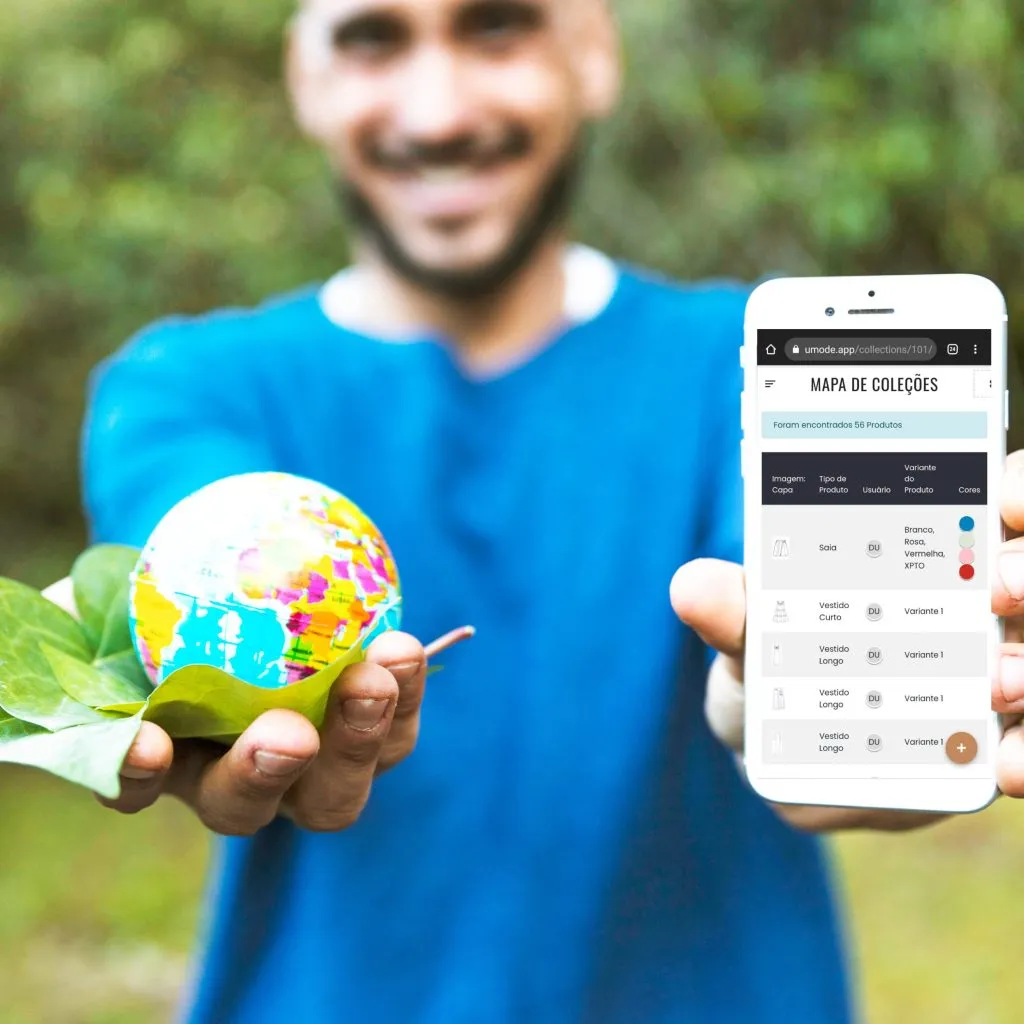
Photo: Freepik
Digital tech packs and the environment
Besides the dynamism they bring to the textile production process, another issue that deserves attention is the environment. Developing tech packs digitally reduces paper consumption and waste.
Want to apply this to your operation?