Tech packs in fashion PLM: how they can save your brand time and money
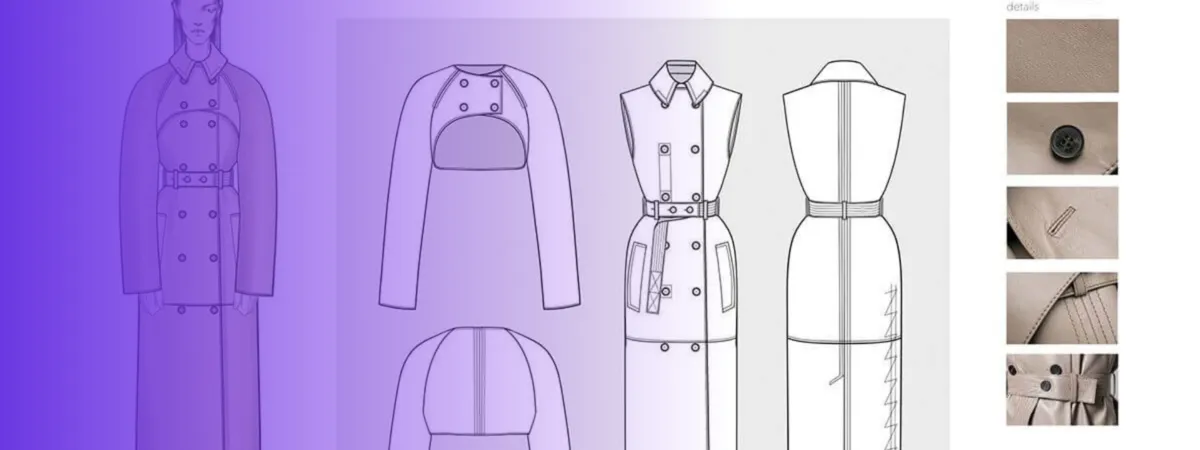
Tech packs are documents that contain detailed information about a fashion product. They are created as part of the product and collection development process and are an essential tool for designers, product developers, manufacturers and other members of the production team.
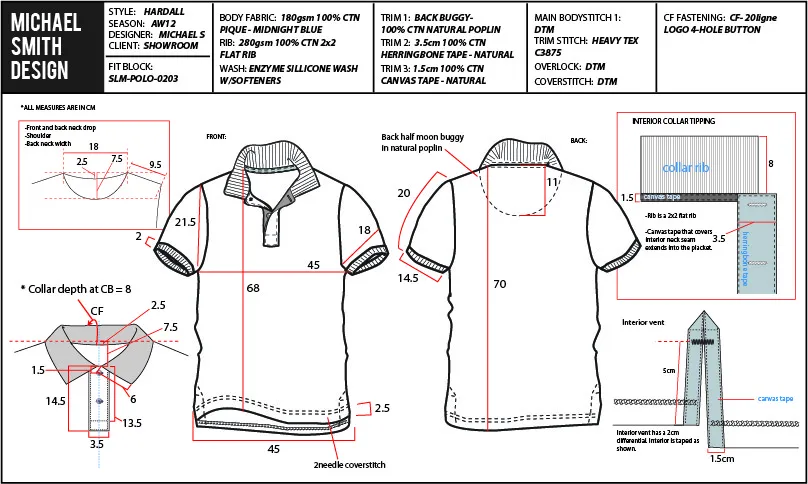
Within a fashion PLM system, tech packs can be created from a set of predefined templates and standards. These templates include information such as measurements, fabrics, colors, finishes and other important specifications. In addition, tech packs usually include technical drawings and detailed instructions for producing the product, to make sure it is made to specification.
In this article you will see how tech packs help your brand save time and money when developing a new product.
Why are tech packs important?
Tech packs are the visual contracts you create with your factory so that it can interpret your designs and build a working prototype. Without a detailed tech pack, your product development process becomes much less efficient and organized. Tech packs are important tools to mitigate risk, simplify communication and consolidate product data. In the case of errors, for example, suppliers can access the product details and consult the illustration that shows the requested specifications.
Put simply, tech packs are like a written contract that documents your product's design and gives you a starting point to communicate with factories and develop successful products.
How does a tech pack help your brand make better decisions?
It is also worth mentioning that tech packs let you receive quotes and explore new products. A factory cannot provide an accurate quote if it does not have access to ALL the product specifications in advance (construction, manufacturing, finishes, measurements, colors, etc.). For example, you can send a tech pack to a seamstress and receive a much more accurate quote for your product. Tech packs help brands compare prices and quality of work.

Tech packs help keep things organized, which is especially important for fashion companies in their early stage. When negotiating with a manufacturer without a tech pack, you suffer from distortions and inaccurate quotes that you cannot dispute for lack of knowledge about the product.
If you work with suppliers abroad, tech packs will be essential to ease communication and provide a frame of reference that goes beyond the language barrier. Regardless of where your factories are located, using tech packs will help you assess the best price per unit and save thousands in the long run.
Do tech packs reduce sampling costs?
Sampling costs can vary widely depending on where sampling is done. Factories based in Brazil or the United States can charge hundreds of reais (or dollars) for a single sample, which is why many fashion companies prefer to manufacture products in Asia, where costs tend to be lower.
These values can vary because this stage requires much more manual work, with manufacturers cutting the fabric and making whole patterns by hand before construction and sewing begin. Even the simplest pieces can take hours to sample, and often do not even generate a profit for the factories.
Now imagine how hard it would be to receive accurate quotes for your samples without proper tech packs. Lacking this tool can mean you need to run several tests before getting a correct sample. Yes, you can try to communicate those product details verbally or by email, but it will be much harder to reach the final results you expect compared with using a high-quality tech pack.
A good tech pack helps shorten the sampling phase and greatly reduce lead times. All the necessary product details, including color samples, fit samples and so on, are easily accessible and replicable with this kind of documentation. A fashion PLM can also let internal team members and suppliers communicate material costs, arrival dates and sample data per style, so products arrive as planned without chasing updates from your factory.
Perhaps the most important aspect of creating the tech pack is the ability to share feedback and revise product specifications in a way your factory can understand. In the tech pack creation process in a PLM, design and development teams can leave comments, make annotations, upload images and collaborate to make changes faster. Integrated functionality lets teams modify measurement requests to their factories and approve the product or request an additional sample at a convenient point.
Do tech packs save time?
Using a tech pack can help your brand automate communications that would normally be done manually, by email or messages, reducing the margin for error and shortening your time to market.
Take an example: say you spend 10 minutes emailing a supplier to explain product details and production requirements. If six more emails are needed to convey what you need for your samples, you have already lost a full hour.
Now imagine that after your sample arrives, you still need to exchange three or four emails until the product is finalized. This whole process makes you lose nearly two hours of work, and several days of waiting between sending and receiving each email. Every day spent taking your product from design to production is a missed opportunity to bring it to market faster. One of the roles of a fashion PLM is to help brands shorten production lead times and run a far more organized product development cycle. A detailed tech pack will streamline your designer's creative process, saving time by aligning with factories on the raw materials and specifications needed to create new styles or products.
Want to apply this to your operation?